Analysis
Meta hires OpenAI veteran Luke Metz as frontier AI talent market stays fluid
Luke Metz, who previously worked at OpenAI and co-founded Thinking Machines with Mira Murati, has joined Meta's Superintelligence Labs under Alexandr Wang. The hire reflects intensifying competition for specialized AI researchers and raises questions about whether star talent acquisitions sustain competitive advantage.
By Elvin C ·
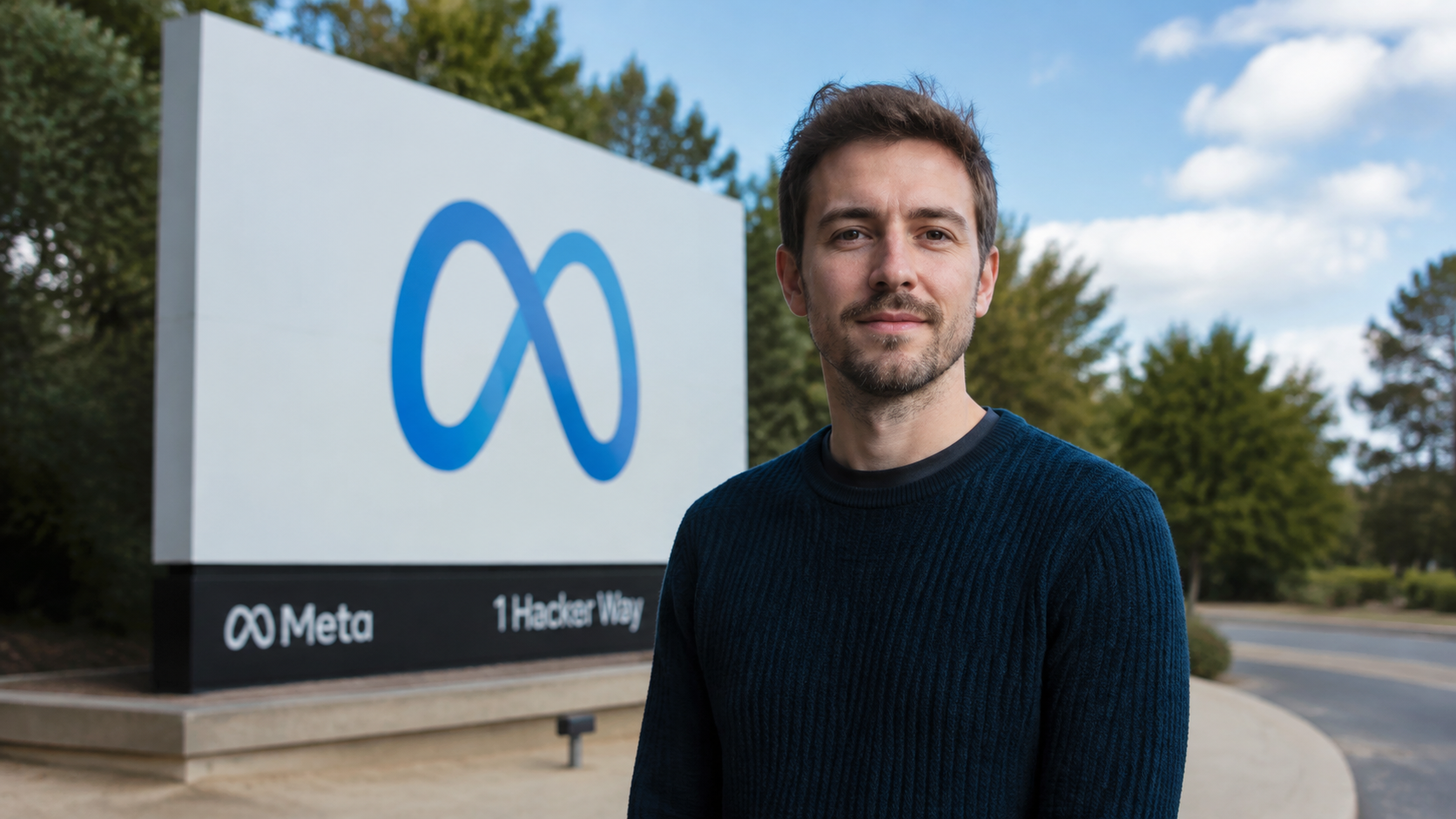
Meta has hired Luke Metz, an AI researcher who departed OpenAI in 2024 and later co-founded Thinking Machines Lab with Mira Murati before returning to OpenAI, according to an Axios report indexed August 23. Metz will join Meta's Superintelligence Labs, operating under Alexandr Wang's leadership. The move underscores the acceleration of poaching among major AI laboratories as organizations compete for specialized talent in frontier model development.
The hire reflects a pattern that has accelerated over the past two years: major platforms attempting to lock in individual researchers through employment offers, equity packages and leadership roles. Meta AI has committed substantial resources to frontier research, signaling that the company views talent concentration as a lever for model capability. Yet the strategy carries structural risks. Individual researchers, however accomplished, operate within organizational systems. A hire's impact depends on team composition, access to compute, autonomy over research direction and institutional incentives. Compensation alone does not guarantee sustained innovation or retention. Axios report indexed August 23 documents the reporting behind this account.
Metz's employment history illustrates this tension. He left OpenAI in 2024, suggesting dissatisfaction with compensation, role scope or research priorities. He then co-founded Thinking Machines Lab with Murati, indicating confidence in independent venture formation. His return to OpenAI followed, suggesting either that the startup faced challenges or that OpenAI's counteroffer outweighed independence. Now, Meta's recruitment of Metz reflects a calculation that his specific expertise and track record justify the acquisition cost. Whether the hire produces durable competitive advantage hinges on factors Meta controls incompletely: Metz's motivation within a large organization, the caliber of colleagues he works alongside, and whether Meta's infrastructure and strategy align with his research priorities.
The economics of talent concentration
The frontier AI labor market has bifurcated. A small number of researchers with demonstrated track records in large-scale model development command premiums. These individuals move between OpenAI, Google DeepMind, Meta, Anthropic and smaller ventures, often triggered by compensation revisions, equity revaluation or strategic disagreements. The premium reflects real scarcity: training and deploying frontier models requires both theoretical knowledge and hands-on experience at scale, creating a narrow talent pool. Employers bid aggressively, offering base salaries, equity packages and research autonomy to secure hirings. Meta AI offers useful technical background for evaluating the claim.
From an incentive standpoint, the strategy is rational for individual firms in the short term. Acquiring a proven researcher can accelerate model development, reduce time-to-capability and signal organizational seriousness to other talent. From a systems perspective, however, the model creates perverse dynamics. As compensation for frontier researchers rises, it draws talent away from academia, smaller ventures and applied domains. The talent pool for enterprise AI and cloud computing infrastructure shrinks. Second, high compensation packages create internal wage compression and retention hazards: existing employees question their own value, and the organization faces pressure to adjust multiple salary bands simultaneously. Third, individual hires do not guarantee institutional learning or knowledge transfer. When a researcher departs, embedded tacit knowledge often departs with them unless documented and diffused explicitly. The operational tradeoff is also reflected in Thinking Machines Lab.
Meta's track record with talent acquisition is mixed. The company has successfully integrated researchers from academia and other labs, but has also experienced notable departures. Yann LeCun's leadership of Meta AI has produced substantial research output, yet the organization has cycled through research priorities and organizational structures. Metz's arrival will be evaluated against these institutional patterns. If Meta's Superintelligence Labs provides research autonomy, compute access and strategic alignment with Metz's interests, the hire may sustain productivity. If organizational bureaucracy, shifting priorities or misaligned incentives dominate the experience, Metz may become another high-profile departure within 18 to 36 months. For broader context, OpenAI outlines the relevant standard or institution.
Durability questions and structural limits

Star hire strategies work best when they address specific organizational capability gaps. If Meta identified a bottleneck in Metz's domain and designed his role to address it directly, the investment has clearer justification. If the hire reflects a generic push to accumulate talent, the durability question becomes sharper. Frontier AI research requires sustained capital investment, access to cutting-edge compute infrastructure, and strategic clarity about which research directions matter for product differentiation and capability advancement. Talent is necessary but not sufficient. enterprise AI helps place the issue within its wider policy and engineering context.
The labor market for frontier AI researchers will likely remain fluid. OpenAI has demonstrated that compensation, equity and autonomy can retain talent during competitive poaching. Anthropic has hired notable researchers from Google and other labs. Smaller ventures continue to form as researchers with particular convictions about alignment, capability focus or organizational structure depart larger employers. This fluidity creates opportunities for edge organizations but also disciplinary effects: if Metz's role at Meta fails to deliver research outcomes or suffers from organizational friction, his market value may decline relative to peers who remained at OpenAI or joined ventures early.
Meta's Superintelligence Labs represents the company's most explicit commitment to frontier research in several years. Alexandr Wang's leadership signals serious capital allocation and strategic intent. Yet the lab's track record remains nascent, and organizational outcomes depend on sustained funding, researcher autonomy and strategic coherence across multiple hiring cycles and research priorities. A single hire, however distinguished, does not constitute durability. Meta's ability to retain Metz and attract complementary talent while building cohesive research teams will determine whether the Superintelligence Labs becomes a sustained competitive asset or another cycle of high-profile acquisitions followed by departures and organizational restructuring.
The broader implication is that frontier AI competition increasingly hinges on organizational design, not just capital and talent acquisition. Companies can hire proven researchers, but they must also build environments where those researchers produce sustained innovation, where knowledge transfers across teams and where strategic priorities align with individual motivation. Meta's hire of Metz is a rational move in a competitive talent market, but its value will ultimately depend on institutional factors that Meta's leadership controls and organizational dynamics that remain uncertain. The final point can be checked against cloud computing.
Topics: Meta, OpenAI, AI talent, Superintelligence, competitive strategy