Analysis
Anthropic IPO Prospectus Puts a $2 Trillion Valuation Against Its Compute Bill
Reported details from Anthropic's prospectus show fast revenue growth alongside enormous losses and long-term infrastructure obligations. The filing could give public investors their clearest look yet at frontier-model economics.
By Elvin C ·

Anthropic is preparing an initial public offering that could value the company above $2 trillion, according to reported details from a prospectus circulating ahead of a possible November listing. The numbers expose the central tension in frontier AI: revenue is rising quickly, but the cost and contractual commitment required to sustain that growth are rising on a scale public markets have rarely evaluated in a software company.
Reuters reporting cited 2025 revenue of about $4.6 billion and an operating loss approaching twice that amount. A much larger net loss included a substantial accounting charge tied to financing instruments that may convert into shares, a distinction that matters because it is not equivalent to cash leaving the business for model training or customer service.
The prospectus reportedly describes hundreds of billions of dollars in future cloud, compute and infrastructure obligations. Those commitments secure scarce capacity and may support revenue growth, but they also reduce flexibility if model efficiency improves faster than expected, demand shifts to lower-cost competitors or customers resist prices needed to recover the expense.
A valuation above $2 trillion would place Anthropic among the world's most valuable public companies only five years after its creation. To support it, investors would have to believe Claude can capture a large share of enterprise work while maintaining enough pricing power to pay for expanding inference and research.
From Announcement To Operation
Annualized revenue is useful for a fast-growing subscription business, but it can overstate durability when customer contracts are young and pricing remains strategic. Investors need cohort retention, usage concentration and gross margin after inference, not only a run-rate extrapolated from the latest month.
Anthropic's relationship with cloud and chip partners complicates the picture. Strategic investors can provide capacity, distribution and cash while also receiving large payments through infrastructure agreements. Public filings should make those circular flows legible so revenue growth is not confused with the movement of capital among aligned companies.

The company has positioned safety and enterprise reliability as differentiators. That strategy can support premium pricing if customers view controls, data handling and model behavior as materially better than alternatives. It can also create political risk when Anthropic's restrictions conflict with government procurement demands, as the company's dispute with the Pentagon has already shown.
Public ownership would change the pressure around release schedules. Quarterly expectations can reward rapid product expansion even when research teams want more evaluation time. Governance provisions, board authority and disclosure around delayed models will therefore matter alongside conventional financial metrics.
AI companies are building revenue quickly, but they are also signing infrastructure commitments on a scale normally associated with utilities and sovereign projects. The result is a financing structure in which laboratories, cloud providers, chipmakers and power developers increasingly depend on one another's growth assumptions.
The market will eventually ask a less forgiving question than whether demand is growing. It will ask whether revenue can outpace compute, financing, support and customer-acquisition costs once promotional pricing and strategic subsidies begin to fade.
A public listing would force more disclosure around gross margins, customer concentration, compute obligations and related-party relationships. Those details matter because headline annualized revenue can rise even while the cash required to serve each new customer remains unusually high.
Anthropic IPO does not operate alone. Its practical effect depends on suppliers, customers, regulators, researchers and the people expected to review or live with the result. A change at one layer can move cost or risk into another rather than eliminate it, so the analysis has to follow the entire chain of authority and dependency.
Organizations connected to AI valuation have incentives to emphasize speed, capability and market reach. Those incentives do not make their claims false, but they increase the value of transparent methods and outside testing. A useful disclosure explains the comparison, the operating conditions and the cases that did not work, not only the strongest result from a prepared demonstration.
Accountability must remain attached to a person or institution. Systems associated with compute commitments can recommend, rank, summarize or act, but they cannot carry legal and moral responsibility in the way an organization can. A deployment needs a named owner for approval, monitoring and incident response, with authority to pause the system and require a design change.
The Evidence That Matters Next
The clearest operating metric will be the relationship between revenue growth and the marginal cost of serving demand. Better chips, model routing, caching and smaller models can improve economics, but longer context windows and agent workflows can consume those gains by making each customer interaction more computationally intensive.
Investors should also examine the duration and pricing of compute commitments. A fixed obligation can become valuable if capacity remains scarce and Anthropic's demand continues rising. It can become a burden if competitors lower prices, new hardware changes the cost curve or a recession reduces enterprise experimentation.
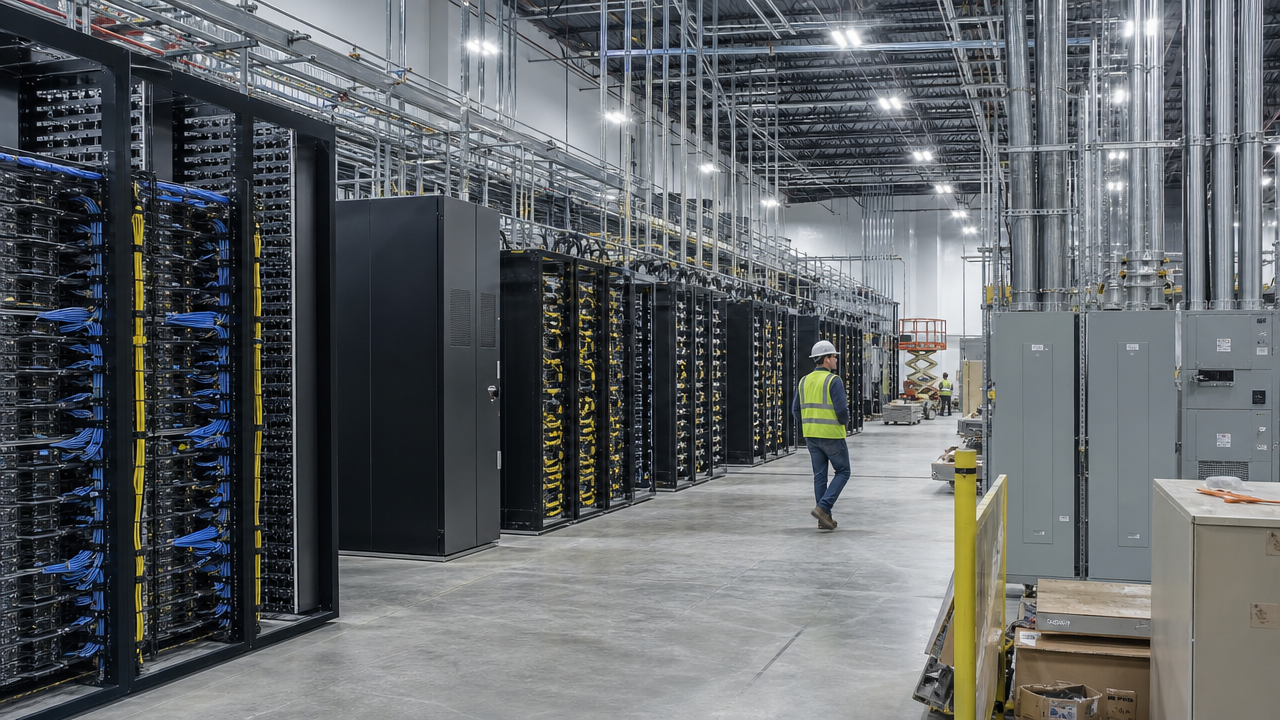
The IPO would create a benchmark for every private frontier laboratory. OpenAI, xAI and other developers would be compared with Anthropic's margins, commitments and customer mix even if their corporate structures differ. Suppliers may welcome the disclosure because it can validate infrastructure demand, while software companies may face sharper questions about how much value remains above the model layer.
Anthropic's offering is therefore more than a liquidity event. It is a public test of whether frontier intelligence behaves economically like software, infrastructure, a regulated utility or some combination of all three. The prospectus can support a historic valuation, but only if the detailed numbers show a path from spectacular growth to sustainable cash generation.
The prospectus should clarify how much revenue comes from direct API use, consumer subscriptions and enterprise contracts sold through cloud partners. Those channels have different margins and bargaining dynamics. A dollar routed through a strategic platform may not produce the same economics as a direct customer relationship.
Research spending is another area where conventional software comparisons break down. Some training runs create reusable model improvements, while others are experiments with uncertain returns. Investors will need enough detail to judge the cadence and scale of spending without demanding disclosure that reveals a technical road map.
The valuation debate will also turn on durability. Enterprises may use several models and switch routing based on price or performance, limiting the lock-in associated with older software platforms. Anthropic can strengthen retention through trust, tools and workflow integration, but each source of loyalty carries a cost.
A listing would make quarterly expectations part of the operating environment. That pressure can improve financial discipline, yet frontier research does not arrive on a predictable calendar. Management will have to explain periods of heavy investment without using scientific uncertainty as a blanket excuse for weak execution.
Risk disclosures deserve close reading because the company's public mission emphasizes safety. Statements about catastrophic capability, misuse or loss of control are not ordinary boilerplate when the same company is asking investors to finance faster development. The prospectus should connect those risks with concrete governance and release authority.
The IPO could become a reference price for the entire sector. Cloud providers, chipmakers and private laboratories would use the offering to defend their own commitments and valuations. A weak reception would travel through that network just as quickly, tightening capital for projects built on similar growth assumptions.
Public investors will need a bridge between technical usage and financial reporting. Token volume, reserved capacity and benchmark progress are not substitutes for revenue quality. The useful disclosures will connect customer behavior with cost of service, contract duration and the capital needed to support another unit of demand.
Cloud commitments can create both advantage and fragility. Guaranteed capacity protects a laboratory during shortages and can improve unit pricing, but take-or-pay terms become painful when efficiency changes or demand disappoints. The duration, minimum spend and renegotiation rights matter as much as the headline amount.
Concentration deserves close attention on both sides of the income statement. A few large customers can accelerate growth, while reliance on a few infrastructure providers can limit bargaining power. When the same strategic partners are also investors, suppliers and distribution channels, ordinary commercial relationships become harder to interpret.
A premium valuation can still be rational if the company establishes a durable platform with improving margins. The burden of proof is unusually high, however, because the market is pricing years of execution while the technology, regulation and competitive field can change within a quarter.
Timing will shape the outcome as much as capability. Organizations evaluating Anthropic IPO should separate what is available now from what has been demonstrated, announced or promised for a later release. Road maps can guide preparation, but contracts and operating decisions should rest on functions that customers can test under current terms.
The most useful early adopters will publish more than success stories. They can describe the work selected, the baseline, the supervision required and the reasons a deployment was narrowed or stopped. That evidence helps other teams avoid repeating expensive mistakes and gives suppliers a clearer picture of what must improve.
Workforce effects should be measured at the process level. A tool connected to AI valuation may remove one repetitive step while adding review, exception handling and customer communication elsewhere. Leaders need to ask who receives that new work, whether the role has enough authority and training, and whether the promised time saving survives the transfer.
Metrics should include the failures that never become public incidents. Abandoned tasks, corrected outputs, permission denials and manual takeovers show where a system encounters uncertainty. Treating those events as operational data, rather than hiding them to protect an adoption target, produces a safer and more accurate investment decision.
The surrounding market will not remain still while compute commitments develops. Competitors can lower prices, regulators can change reporting duties and customers can shift toward open or locally hosted alternatives. A resilient strategy preserves the ability to change models, suppliers and controls without rebuilding the entire workflow.
That flexibility is not an argument for waiting indefinitely. It is an argument for learning in a way that preserves choices. A bounded deployment with real users, documented evidence and an exit path can create knowledge now without turning an uncertain technology decision into an irreversible institutional dependency.
Investors should distinguish accounting losses from operating cash use, but they should not dismiss either. Convertible financing can create large noncash charges, while long-term cloud contracts can create real obligations that do not appear in a single quarter's capital spending.
The first implementation discipline is a clear baseline. Teams should know how the work is performed today, how long it takes, which errors occur and which outcomes matter before introducing a new system. They can then compare accepted results, correction time, total cost and policy violations rather than treating activity as evidence of value.
Procurement should cover the conditions that demonstrations avoid. Buyers need to ask where data is processed, how long it is retained, which subcontractors receive it, how model changes are communicated and whether records can be exported if the relationship ends. Production contains incomplete instructions, conflicting permissions and unusual edge cases that a staged launch rarely shows.
Human review has to be designed around the limits of attention. Asking a person to approve hundreds of routine outputs produces predictable click-through behavior rather than meaningful oversight. Review should concentrate on uncertainty, unusual actions and cases with irreversible consequences, while giving the reviewer enough source material to reach an independent judgment.
Data lineage deserves equal scrutiny. A polished answer can be assembled from stale, incomplete or incorrectly joined records. Teams need to know where important facts came from, when they were updated and which transformations occurred before a model used them. That record supports correction, audit and a more honest account of what the system actually knows.
Security testing should include the surrounding application, not only the model endpoint. Identity tokens, browser sessions, retrieved documents, tool permissions and approval flows determine whether an unsafe instruction becomes a blocked request or a live external action. Recovery procedures, revocation and preserved logs are part of prevention because no control will catch every failure.
Public trust will depend on whether companies and institutions communicate uncertainty without hiding behind technical complexity. People need to know what was tested, which environments remain underrepresented, what monitoring is in place and how they will learn about a serious incident. Clear limits make a system easier to use responsibly; vague assurances make every later failure more damaging.
Competition can improve price and quality, but it can also make caution look like weakness. Governance has to preserve room for a team to delay, narrow or withdraw a feature without treating restraint as commercial failure. The most credible organizations will show that their release process can say no when evidence falls short.
The near-term questions are concrete. Watch for independent confirmation, customer deployments, regulatory detail and evidence that the system works beyond a prepared setting. Changes in pricing, access and responsibility often reveal the strategy more clearly than a keynote or a benchmark chart.
The significance of anthropic ipo prospectus puts a $2 trillion valuation against its compute bill will be settled by what happens after the announcement cycle. The durable measure will be whether the evidence improves, the controls survive pressure and the institutions involved remain willing to explain decisions when performance and responsibility pull in different directions.
Topics: Anthropic IPO, AI valuation, compute commitments, Claude revenue, capital markets