Analysis
Amazon Cuts Alexa Claude Dependence As AI Assistant Costs Bite
Amazon is reportedly redesigning Alexa+ to rely less on Anthropic's Claude, showing how consumer AI assistants are becoming routing, caching, and infrastructure-cost problems.
By Elvin C ·
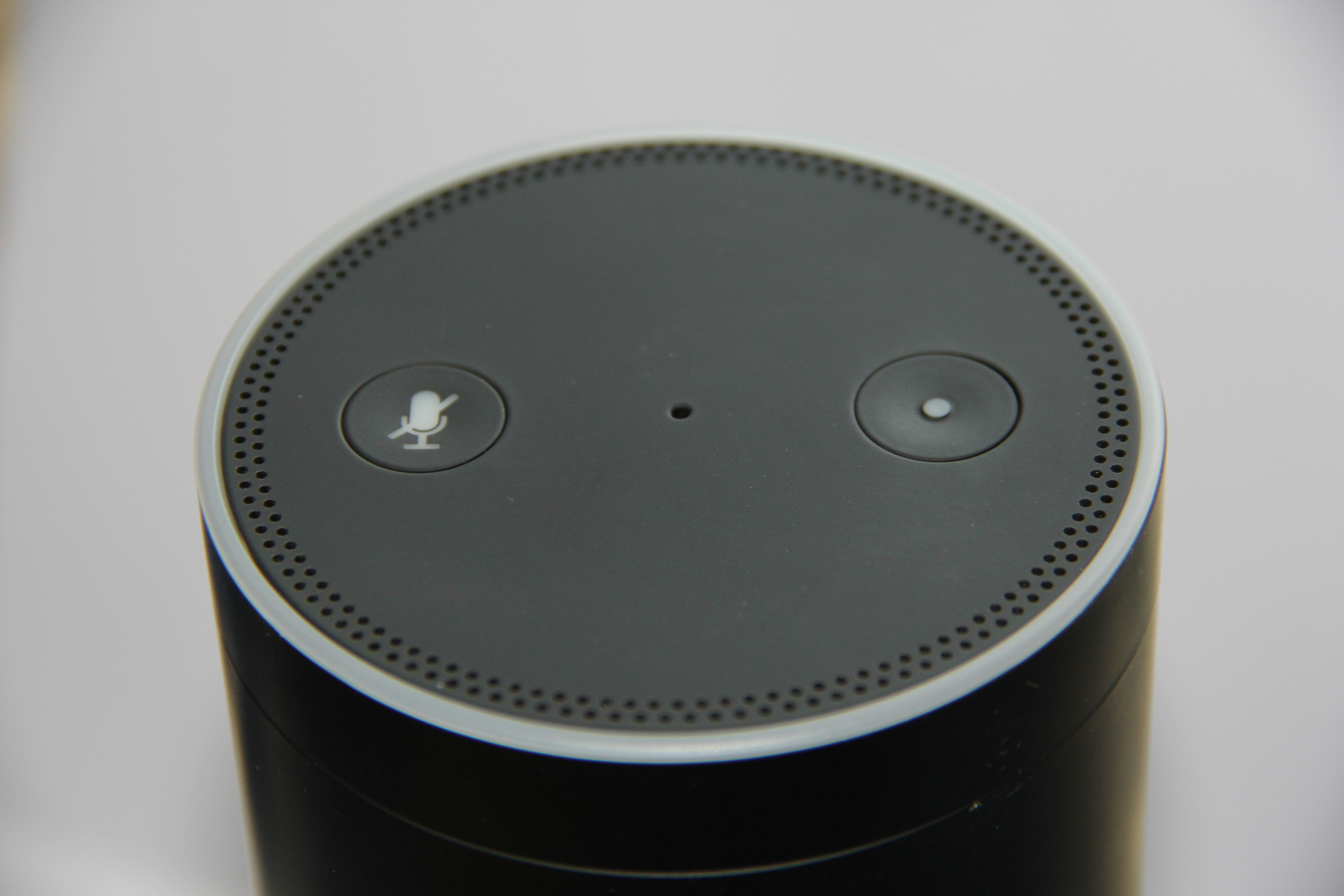
Amazon is reportedly trying to make Alexa+ cheaper to run by reducing its reliance on Anthropic's Claude models, a sign that the next phase of consumer AI will be measured as much by unit economics as by demo quality. Business Insider reported on July 23, citing internal documents, that Amazon is rerouting more Alexa+ requests through its own models, using caching, avoiding redundant inference, and applying deterministic methods for predictable answers. The reported target is straightforward: make a voice assistant capable enough to feel modern without turning every household request into an expensive frontier-model call.
The numbers explain the urgency. Business Insider reported that AWS costs for Alexa+ were projected to reach $1.7 billion in 2026 and that the current changes could more than quadruple transaction capacity per computing unit. Amazon has not publicly confirmed every internal figure in the report, so they should be treated as reported internal estimates. The strategic point still holds. A voice assistant has to answer many low-value questions, many times a day, at consumer scale. That is a harsh environment for a model that is priced and operated like scarce expert labor.

Amazon's relationship with Anthropic makes the reported shift more important, not less. Amazon has invested billions of dollars in Anthropic and offers Claude through Amazon Bedrock. That partnership gives Amazon access to one of the leading model families, but it does not remove the cost of serving a mass-market assistant. The company can be strategically aligned with Claude while still deciding that routine Alexa tasks should be handled by smaller, cheaper, or more specialized systems.
The technical pattern is becoming familiar across enterprise and consumer AI. Not every request needs the strongest model. A weather query, smart-home command, timer, music request, or simple factual answer can often be handled by a narrow system, a cached response, or a smaller model. Harder tasks can be routed to a frontier model only when the extra capability changes the outcome. That makes routing a core product discipline, not an optimization that happens after launch.
Caching is especially important in voice. Users repeat common requests. Families ask the same assistant similar questions. A deterministic answer to a known command is cheaper and often more reliable than sending a fresh prompt through a large model. The challenge is knowing when a request is truly routine and when personalization, context, or ambiguity makes the larger model necessary. A bad routing decision can make the assistant feel slow, wrong, or oddly inconsistent.

The chip layer is part of the same calculation. Business Insider reported that Amazon is considering more use of Trainium and other internal infrastructure as it tries to raise GPU efficiency and reduce dependence on Nvidia. Trainium gives AWS a way to control more of the cost stack, but specialized chips only help if the software, model mix, and workload scheduling fit the hardware. The voice assistant is a product, but it is also a load-balancing problem.
For Anthropic, the report is not automatically bad news. A serious customer routing routine traffic away from Claude may still reserve Claude for complex tasks where the model performs best. Premium models are likely to be used selectively, and vendors will have to justify their price on tasks where cheaper systems fail. The volume may move down the stack while the margin stays at the difficult edge.
For Amazon, the question is whether Alexa+ can become useful enough to justify renewed consumer attention. The original Alexa scaled because simple voice commands worked. The new Alexa has to do more without making the economics worse. Andy Jassy has repeatedly emphasized the need to lower AI costs for broad adoption, and Alexa+ is where that theory meets millions of ordinary interactions.
Voice assistants create a special version of the AI cost problem because users expect them to be cheap, instant, and always on. A person may ask for a timer, a reminder, a song, a grocery-list change, a weather check, a home-light command, and a follow-up question in the span of a few minutes. If each turn is priced like a high-value knowledge task, the assistant becomes difficult to operate at household scale. The consumer does not see that bill. The platform does, every time a casual request wakes up expensive inference.
That is why the reported move toward deterministic methods matters. A deterministic system is less flexible than a large language model, but it can be faster, cheaper, and more predictable for well-defined tasks. Alexa already has years of command patterns and device integrations. The question is how to combine that old assistant architecture with generative reasoning without making the product feel stitched together. The best routing systems disappear from the user's view. The worst ones expose themselves through odd refusals, inconsistent memory, or answers that change quality from one turn to the next.
Amazon also has to manage latency. In voice, a one-second delay can change how capable a system feels. Large models improve reasoning, but context assembly, network trips, safety checks, and tool calls can slow the interaction. A cheaper path is not only cheaper if it is also faster. That gives Amazon a product reason and an infrastructure reason to keep more work on narrower systems when the task is obvious.
There is a customer-trust angle as well. If Alexa+ routes some requests to Amazon models and some to Anthropic models, users may not care about the vendor name. They will care whether the assistant remembers correctly, respects privacy settings, and behaves consistently across devices. Enterprise AI buyers often ask which model handled a request. Consumer voice users rarely do. That places more responsibility on Amazon to maintain a coherent product standard across a mixed model stack.
The reported cost work also shows why AI partnerships are not simple outsourcing deals. Amazon can invest in Anthropic, sell Claude through AWS, and still build internal models that compete for Alexa traffic. Anthropic can benefit from AWS distribution while facing pressure from customers that want to lower inference spend. The AI market is becoming layered. A partner can be a supplier, a customer, a platform tenant, and a benchmark rival at the same time.
For developers building on AI assistants, the lesson is to design for tiers from the start. A product that assumes every task needs a frontier model may work in pilot but break at scale. The mature version of the stack is likely to include small models, rules, retrieval, cached answers, tool-specific handlers, safety classifiers, and escalation to stronger models when uncertainty or consequence is high. That is less glamorous than a single universal model, but it is closer to how production systems survive usage growth.
Amazon's hardware footprint gives it another advantage. Echo devices, Fire TV, Ring, Eero, and other home products create many places where an assistant can collect context or trigger action. That also creates many places where mistakes matter. A model that misunderstands a shopping question is annoying. A model that mishandles a smart-home command or shares the wrong household context is more serious. Cost routing therefore has to work alongside permission routing and context routing.
The timing is important because consumer AI enthusiasm is moving from novelty to retention. Users have seen fluent demos. They now notice whether a product is reliable enough to use every day. Alexa+ has to be both more capable than the old Alexa and less costly than a frontier chatbot bolted onto a speaker. That is a narrow engineering target. It favors companies with cloud capacity, model access, device distribution, and years of interaction logs.
The economics also explain why Amazon may emphasize its own models even while maintaining a close Anthropic relationship. Internal models can be tuned around Alexa's recurring patterns, languages, household contexts, and device actions. They can be optimized for Amazon's infrastructure rather than for a general market. That does not make them universally better than Claude. It can make them better suited for the low-margin, high-frequency work of a home assistant.
A mixed stack also gives Amazon bargaining power. If Alexa+ can route routine traffic away from one supplier, Amazon is less exposed to price changes, capacity constraints, or product decisions outside its control. That matters in a market where model vendors are still adjusting pricing and where demand can surge around new features. A consumer assistant cannot depend on a scarce model path for every ordinary request.
The user-experience risk is fragmentation. A household assistant has to feel like one assistant, not a collection of models with different personalities. If a timer command is crisp, a shopping-list update is inconsistent, and a complex planning question is eloquent but slow, the product may feel uneven. Amazon's challenge is to hide the routing machinery while preserving enough transparency for sensitive tasks where users deserve to know how an answer was produced.
Privacy and memory are part of cost control too. The more context a model receives, the more expensive and sensitive the request becomes. A good assistant should not send an entire household history to answer a simple command. It should know when local context is enough, when account-level context is required, and when personal data should be excluded. Efficient inference and data minimization can reinforce each other if designed deliberately.
The report also points to the next stage of AI infrastructure competition. Model quality still matters, but production customers increasingly care about cost per successful task. That includes retries, tool calls, latency, cache hit rates, hardware utilization, and whether the answer actually resolves the user's request. Alexa+ gives Amazon a large internal laboratory for those metrics. If it works, the same lessons can feed back into AWS services sold to other companies.
The financial pressure is likely to shape product claims across the industry. Companies can advertise a powerful assistant, but internally they will measure how often the assistant chooses a cheaper route without lowering satisfaction. That creates incentives to build evaluation systems around real tasks rather than model leaderboards. For Alexa+, success may be a quiet interaction where the user never knows whether Claude, an Amazon model, a cached answer, or a deterministic handler responded. The business goal is not to showcase the strongest model every time. It is to make the household assistant feel dependable while keeping the cost curve flat enough to scale.
The same logic will influence what Amazon exposes to developers and advertisers around Alexa+. If the assistant becomes more capable, third parties will want placement, actions, and integrations. Amazon will need to decide which requests can be monetized, which should remain neutral utility, and which need stronger guardrails because they affect purchases or household decisions. Cost control is therefore only one side of the redesign. The other side is trust in the assistant's commercial incentives.
The lesson for the rest of the AI market is direct. The winning assistant may not be the one that sends every request to the most capable model. It may be the one that knows when not to. Alexa+'s reported redesign shows that consumer AI is becoming a capital-efficiency contest, with routing tables, caches, internal chips, and model portfolios sitting behind the friendly voice.
Topics: Amazon, Alexa+, Anthropic, AI costs