Technology
Caterpillar Applies Decades of Mining Automation Experience to Enterprise AI Deployment
Caterpillar is extending lessons from autonomous mining into AI assistants, digital twins and software engineering across its industrial operations. Its deployment strategy emphasizes proprietary machine data, experienced operators and workflow redesign rather than treating model access as the finished product.
By Patrick T ·
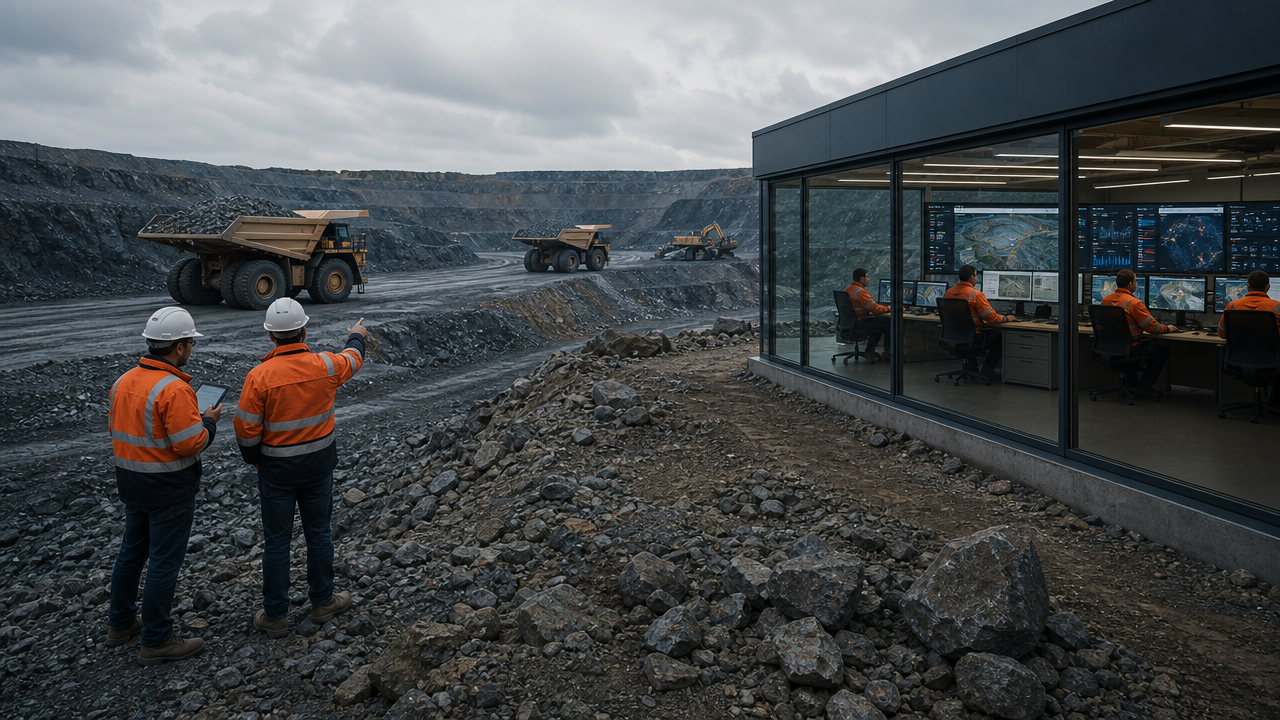
Caterpillar is applying lessons from decades of mining automation to a broader enterprise AI rollout that includes technician assistants, digital twins and software engineering. Its approach begins from a premise many corporate deployments discover late: access to a capable model is not the finished product. Industrial value appears only when the system is connected to trusted operating data, fitted into an existing workflow and supported by people who understand the machinery well enough to recognize a bad answer.
The company already sells autonomous haul trucks, drills, underground loaders, dozers and remote-controlled equipment, together with command centers and fleet-management software. Those products operate in environments where downtime is expensive and unsafe behavior can cause physical harm. Caterpillar Chief Technology Officer Jaime Mineart told TechCrunch that the company now wants to carry experience from mining into more dynamic jobsites, quarries and construction environments.
Mining is a useful foundation because autonomy there has never been only a perception model. A site must define routes, exclusion zones, communications, maintenance procedures and responsibility when equipment stops. Operators need a command interface that shows what machines are doing and lets people intervene. That systems work transfers to enterprise AI. A model embedded in a maintenance process needs permissions, current documentation, escalation paths and a record of the actions it influenced.
The Assistant Stands Next to the Machine
Cat AI Assistant is designed for field technicians working beside equipment. Through voice interaction, a technician can retrieve repair procedures, investigate a fault and identify parts before beginning work. The placement matters. A generic chatbot can summarize a manual, but a useful industrial assistant must identify the correct machine configuration, respect service history and avoid mixing instructions across models. It should reduce search time without encouraging a technician to skip inspection or safety steps.
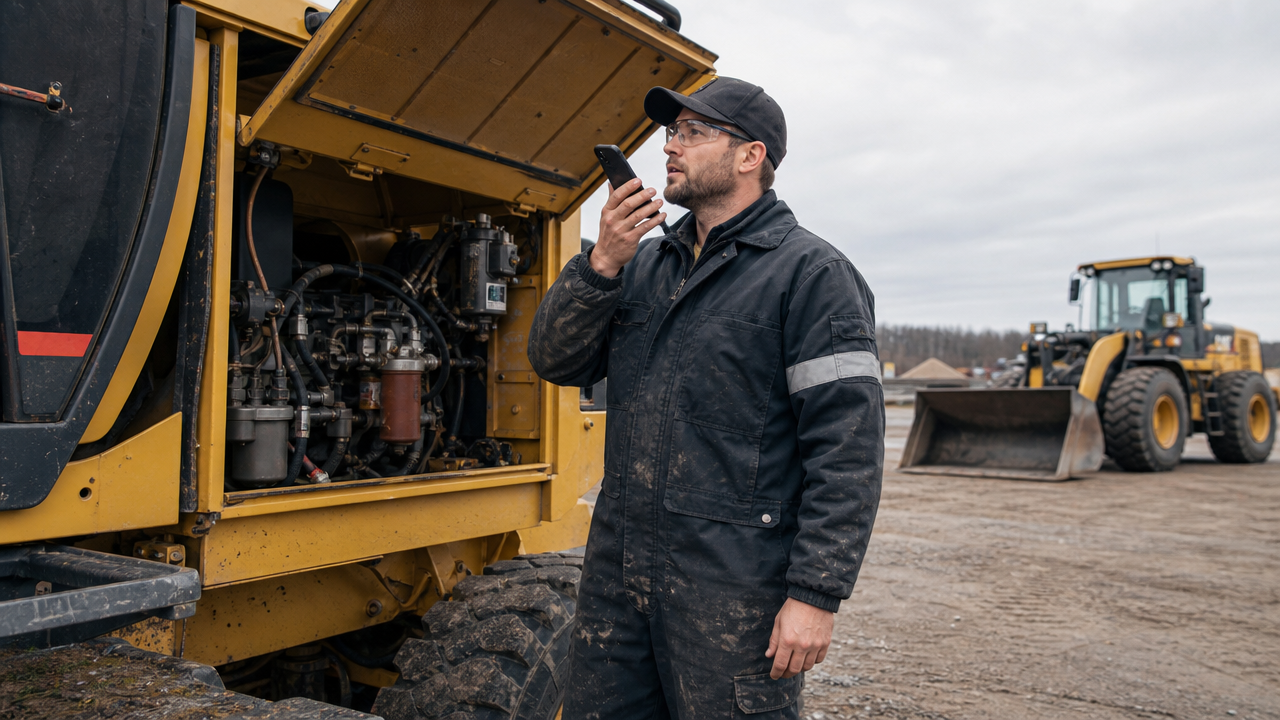
Caterpillar says it has roughly 1.6 million connected assets and more than 16 petabytes of structured data. That history can give models context unavailable in public training sets: sensor trends, failure codes, maintenance records, parts relationships and operating conditions. Quantity alone is not enough. Asset identifiers must be accurate, timestamps aligned and service records normalized. Industrial data often reflects decades of different systems, making governance and integration a continuing engineering task.
The company's autonomous mining portfolio demonstrates the value of a closed operating loop. Machines generate telemetry, fleet software coordinates work and site teams feed maintenance and production outcomes back into decisions. The same pattern can support predictive maintenance and technician guidance if recommendations are evaluated against what happened after the repair. Without that feedback, an assistant may produce fluent instructions while the organization never measures whether first-time fix rates or downtime improved.
Caterpillar is also using AI to generate digital twins and analyze manufacturing operations. A digital twin is most valuable when it remains tied to the state of a real asset or process, not when it becomes a polished but stale visualization. Sensor coverage, update frequency and calibration determine what decisions the twin can support. Teams should identify the operational question first, then build the minimum representation needed to test a change safely.
Workforce Design Is Part of the System
Mineart emphasized that experienced operators help train and evaluate new systems. Their knowledge includes signs that may not appear in a manual: an unusual vibration, a change in material behavior or a sequence of faults that usually precedes a breakdown. Capturing that expertise requires more than asking workers to label data. Product teams need observation, feedback and a process for resolving cases where model recommendations conflict with field judgment.
As machines become more autonomous, some operators may move from controlling one vehicle to supervising several from a remote center. That changes the job rather than simply eliminating it. Supervisors need interfaces that prioritize exceptions, explain why a machine stopped and avoid overwhelming one person with alerts. Staffing ratios should be set by measured workload and recovery demands, not by the maximum number of machines a dashboard can display.
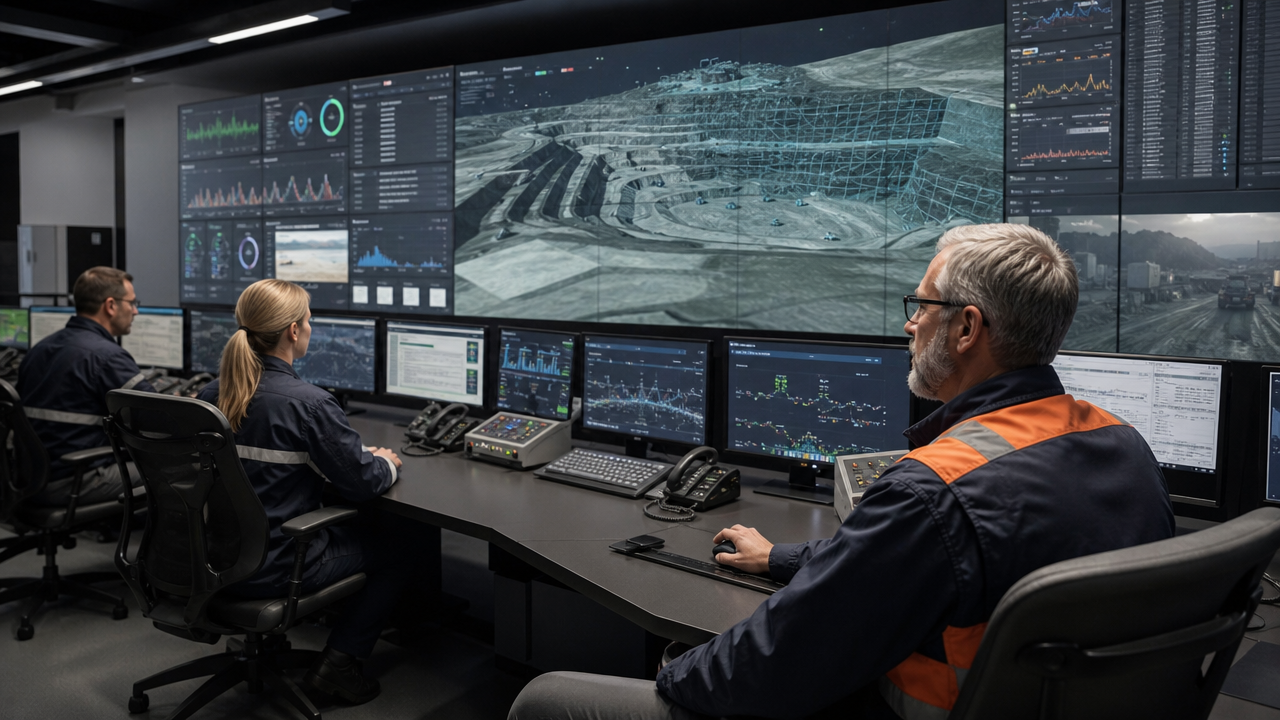
Caterpillar plans to spend $100 million over five years training its 118,000 employees in AI, autonomy and robotics. The number is notable because training budgets are often small compared with software and infrastructure purchases. Effective training will need to vary by role. A technician needs reliable use and verification procedures; a manager needs to redesign work and measure outcomes; a developer needs controls for code and data. One generic AI course will not prepare all three.
The company also uses AI agents for legacy-code modernization, software generation, testing and earlier defect detection. These applications can create immediate leverage because Caterpillar operates large, long-lived software estates. They also require conservative release controls. Generated changes should be reviewed against machine interfaces and safety requirements, with tests that reproduce field conditions. In an industrial company, a software defect can leave the screen and alter physical equipment.
AI Demand Is Already Reaching the Income Statement
Caterpillar's second-quarter results showed revenue reaching $20.5 billion, while sales in its power-generation business rose 72 percent to $3.10 billion amid strong demand connected to data centers. The company is therefore exposed to AI from both directions. It sells equipment supporting the infrastructure boom, and it is deploying AI to improve its own products and operations. That combination gives management a reason to invest, but it should not excuse weak internal returns. Each use case still needs a baseline and measurable operating gain.
Data access should follow job roles. A maintenance assistant may need service history and parts information without access to commercial records or unrelated customer fleets. Agents used in software development need repository permissions that prevent a generated change from reaching production without review. Industrial companies already understand physical lockout procedures. Comparable digital controls can limit what an AI system may read, change or approve.
Suppliers and dealers are part of the deployment. Caterpillar's global dealer network often owns the customer relationship and performs service, so an assistant that bypasses dealer systems could fragment rather than improve the workflow. Shared standards for data exchange, identity and case escalation can let a technician move from an AI suggestion to parts ordering and expert support without re-entering the same information across tools.
Model evaluation should use field cases that include incomplete and contradictory evidence. Clean demonstrations usually begin with a known machine and a clear fault. Real service work may involve a modified asset, intermittent code or missing history. A safe assistant should state uncertainty and request inspection rather than forcing a confident diagnosis. Measuring when the system escalates is as important as measuring how often its first recommendation is correct.
Caterpillar can also learn from near misses in autonomous operations. A stopped machine, manual takeover or abandoned recommendation contains information about where the system's assumptions failed. Organizations often discard those events because the task was not completed. A mature learning loop preserves them, categorizes the cause and verifies that a later update improves the specific condition without degrading routine work.
The strongest part of Caterpillar's strategy, presented at the AI4 conference, is its refusal to separate technology from the worksite. Proprietary data, operator knowledge and deployment discipline are harder to demonstrate than a new interface, but they are also harder for a competitor to copy. The risk is organizational scale: different business units may adopt overlapping tools, duplicate data pipelines or allow local experiments to become critical without common controls. A central platform must create standards without blocking useful site-level adaptation.
Customer contracts should state whether AI recommendations alter warranty or liability. A technician may reasonably hesitate to follow a system if responsibility is unclear when the advice causes damage. Caterpillar can reduce that ambiguity by defining approved use, recording the evidence presented to the worker and preserving human authority to stop. Those controls make adoption easier because they turn an experimental assistant into a supported part of the service process.
Language and connectivity will determine how widely the tools travel. Equipment operates in remote sites and across markets where technicians may not use English or have reliable broadband. Offline access, local terminology and validation across languages are operational requirements, not localization polish. An assistant that works only with a persistent connection at a well-instrumented U.S. site would cover a small portion of the conditions Caterpillar's global fleet encounters.
Caterpillar's next evidence should come from operations rather than announcements. Repair time, repeat visits, equipment availability, incident rates, software defects and worker adoption will show whether the systems improve the business. Mining automation taught the company that a machine becomes autonomous only inside a redesigned site. Enterprise AI follows the same rule. The model can assist, but the workflow, data and people determine whether the result survives contact with the job.
Topics: Caterpillar, industrial AI, mining automation, digital twins, workforce