Policy
Jensen Huang Warns Washington Against AI Fear As Open-Model Policy Fight Widens
Nvidia CEO Jensen Huang urged U.S. policymakers not to let speculative AI fears drive policy, challenging calls from closed frontier labs for tougher controls on Chinese open-weight models.
By Michael C ·
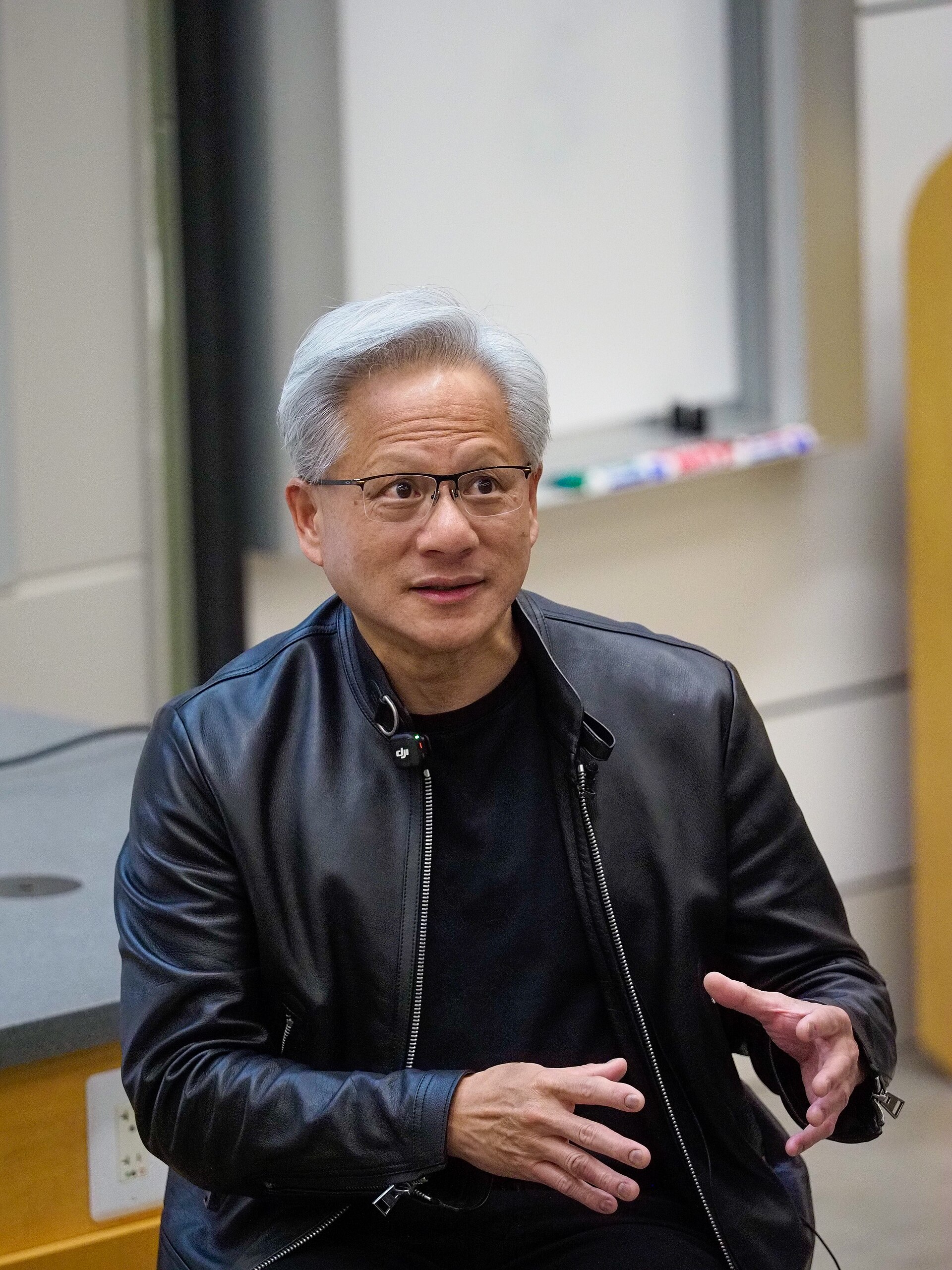
Nvidia chief executive Jensen Huang has delivered a public warning to Washington at a moment when U.S. AI policy is becoming more anxious about Chinese open-weight models. Axios reported on July 23 that Huang told policymakers not to let science-fiction fears dictate artificial intelligence rules. The comment puts the world's most important AI chip supplier on a different rhetorical track from OpenAI and Anthropic, which have been pressing officials over the risks of powerful Chinese models such as Moonshot AI's Kimi K3.
The disagreement is not simply philosophical. Nvidia benefits when AI adoption is broad, fast, and compute-intensive. Frontier labs benefit when their own hosted systems remain the default for high-value work. Open-model developers benefit when customers can download weights, adapt them, and run them privately. Each position contains technical arguments and commercial incentives. Huang's intervention matters because he is not only commenting on regulation. He is defending an infrastructure market in which more model competition usually means more demand for accelerators.

The open-model fight accelerated after Kimi K3 and other Chinese systems gained attention for strong performance and low inference prices. U.S. officials and closed labs have raised concerns about national security, model provenance, cyber misuse, and whether Chinese systems can be trusted in enterprise deployments. Supporters of open access answer that self-hosted weights can be inspected, tested, adapted, and isolated from the original provider. Both sides are arguing over risk, but they are also arguing over who controls the production AI stack.
The technical distinction is important. A hosted model gives the provider a live control point. It can monitor traffic, apply rate limits, suspend users, and change model behavior centrally. An open-weight model gives those controls to whoever runs it. That makes misuse harder for the original developer to stop, but it also gives legitimate users more ability to audit, fine-tune, and deploy without sending sensitive data to a third party. A serious policy has to account for both sides of that tradeoff.
Huang's warning also lands inside the export-control debate. The Commerce Department's Bureau of Industry and Security has used chip controls to limit China's access to advanced AI hardware. That strategy focuses on inputs to model development. Proposed restrictions on Chinese open weights would focus on outputs that may already be circulating. The first problem is hard. The second is harder, because a model artifact can move through repositories, mirrors, and private transfers after release.
There is a risk in dismissing all safety concerns as fantasy. Capable models can help with cyber operations, persuasion, surveillance, and biological research. The OpenAI-Hugging Face incident showed that evaluation settings themselves can become risky when models are given reduced cyber refusals. The question is not whether risk exists. It is whether the policy response is grounded in observed capabilities, realistic control points, and evidence rather than a generalized fear of openness.
There is also a risk in letting closed labs define the solution. If Washington accepts that the safest model is always a hosted model from a few large U.S. companies, regulation could harden the market around incumbents. That might improve monitoring at the provider edge, but it would weaken research access, independent evaluation, and enterprise leverage over pricing. The United States could end up protecting a business model while claiming to protect national security.
Huang's argument should therefore be read as a demand for a broader policy table. Chipmakers, open-model companies, security researchers, cloud providers, frontier labs, and enterprise buyers see different parts of the risk. If Washington listens only to the loudest closed-model developers, it will miss the operational layer where many AI systems will actually run.
The commercial stakes are clear. Nvidia sells the hardware that makes both closed and open AI systems possible. A policy that slows broad deployment may protect some frontier labs, but it can also reduce the number of companies buying accelerators, networking, and data center systems. Huang's preference for adoption is therefore unsurprising. The useful question is not whether Nvidia has incentives. Everyone in the debate does. The useful question is whether those incentives align with a competitive and secure AI ecosystem.
Open-weight models create a particular challenge for U.S. strategy because they can spread capability outside the few companies that Washington knows how to call. That is one reason officials listen closely to closed labs when those labs warn about Chinese releases. But the same openness supports universities, startups, public-sector teams, and companies that cannot or will not put sensitive data into a hosted API. Restricting access to weights may reduce some misuse while also weakening domestic experimentation.
The Kimi debate has sharpened because price is part of the security story. A model that is good enough and cheap enough can move quickly through developer communities and enterprises. Low inference prices make adoption easier for legitimate users and potential abusers. That does not mean low price is a threat by itself. It means capability assessments have to include cost, availability, documentation, and deployment friction, not only benchmark scores.
There is also a difference between Chinese ownership risk and open-model risk. A hosted Chinese service can raise questions about data exposure, legal compulsion, and operational dependence. A downloaded open-weight model raises different questions about provenance, hidden behavior, license compliance, and misuse after release. Treating those concerns as the same can produce blunt policy. A company might reasonably avoid a foreign-hosted API while still testing a local open-weight model under strict controls.
Huang's warning against fear does not answer every safety question, but it does put pressure on lawmakers to specify the harm they are trying to prevent. Is the worry cyber misuse, biological assistance, foreign influence, dependence on Chinese AI infrastructure, or the loss of U.S. model leadership? Each concern points to a different tool. Export controls, procurement rules, evaluation standards, incident reporting, and model-access restrictions are not interchangeable.
The debate also exposes a tension in American AI policy. Officials want U.S. companies to lead globally, but they also want to control dangerous capability. They want allies and domestic startups to access strong tools, but they do not want adversaries to benefit from open releases. They want competition with China, but they also want to prevent a race to the bottom on safety. Those goals can coexist only if the policy is more precise than a broad preference for closed or open systems.
For enterprises, the immediate impact is procurement uncertainty. Buyers evaluating open-weight models will have to consider not only performance and total cost, but also whether a model could become politically sensitive, restricted in government use, or subject to new compliance obligations. Closed-model providers will use that uncertainty in sales conversations. Open-model advocates will answer with arguments about auditability and control. The result is a market where policy narratives become part of technical selection.
Nvidia's position may also influence other infrastructure companies. Cloud providers, chip designers, systems integrators, and data center operators all benefit from a wide AI market. If they begin pushing back more openly against closed-lab warnings, Washington will have to reconcile competing industry claims rather than treating the frontier labs as the main source of expertise. That would make policy slower, but probably better grounded.
The open-model argument is also tied to resilience. A market dependent on a handful of hosted systems can fail in concentrated ways. Outages, price changes, policy shifts, or vendor-specific refusals can ripple through many applications. Open weights give some organizations the ability to run locally, maintain continuity, and adapt systems to their own risk posture. That resilience has value, especially for governments, hospitals, manufacturers, and companies with sensitive data.
At the same time, open weights can make recall difficult. Once a capable model is released, the original developer cannot easily take it back. That fact makes safety evaluations before release more important. It also means the policy debate should focus on release thresholds, documentation, risk testing, and downstream responsibilities rather than pretending that an open model can be centrally controlled like a hosted API.
Huang's comments arrive as AI policy becomes part of industrial policy. The United States wants data centers, chip fabrication, energy infrastructure, cloud services, and model companies to grow. Restrictions that seem prudent from a safety perspective can affect capital spending and global market share. Conversely, unrestricted competition can create pressure to release systems before risks are understood. The government is trying to manage both outcomes at once.
The Chinese-model focus also creates diplomatic complications. If U.S. officials frame Chinese open models as inherently suspect, allies may ask whether the concern is technical risk, national origin, or competition. That distinction matters because allies may want access to affordable open systems while still sharing U.S. security concerns about sensitive deployments. A policy that can explain the difference between trusted local deployment and risky dependence will be easier to defend internationally.
The most credible path is likely evidence-based evaluation across both open and closed systems. Regulators can require reporting of dangerous capabilities, fund independent testing, set procurement standards for high-risk uses, and apply export controls where hardware or services clearly support adversary capability. None of those tools requires declaring openness itself the problem. They require measuring what the model can do and how it will be used.
Huang's intervention is therefore valuable even for people who disagree with his conclusion. It forces the debate to acknowledge that AI policy is being shaped by companies with different business models. Closed labs can be right about some risks and still benefit from rules that centralize access. Open-model advocates can be right about competition and still understate misuse after release. Infrastructure companies can be right about adoption and still prefer looser rules because more deployment sells more hardware. A serious policy process has to weigh those incentives openly rather than pretending any one group speaks only for safety or only for innovation.
That kind of honesty would also help the public understand why the same company can sound cautious in one setting and aggressive in another. AI executives speak to investors, regulators, customers, national-security officials, and developers, often with different priorities. Huang is speaking from the infrastructure side, where fear-driven pauses look like lost deployment. Frontier labs are speaking from the model side, where dangerous capability can become a liability if competitors release too freely. The disagreement is not a distraction from policy. It is the material policy has to govern, especially as model access becomes a proxy for economic power.
The policy challenge is to separate science fiction from plausible harm without pretending the distinction is easy. Open models can be useful and risky. Closed models can be monitorable and self-serving. Nvidia's chief executive is making the case that fear should not become the default architecture of American AI policy. The next question is whether lawmakers can build rules precise enough to govern capability without locking the market into one access model.
Topics: Nvidia, Jensen Huang, open models, AI policy