Ethics
Microsoft Commits to New AI Privacy Rules for Students
Microsoft has agreed to education-focused privacy and safety standards negotiated with the American Federation of Teachers as schools reassess student AI use.
By Michael C ·

Microsoft's student AI privacy commitment. Microsoft has agreed to education-focused privacy and safety standards negotiated with the American Federation of Teachers as schools reassess student AI use. The development emerged in Associated Press reporting, placing a concrete decision, release or disclosure behind a debate that had often been discussed in broader terms.
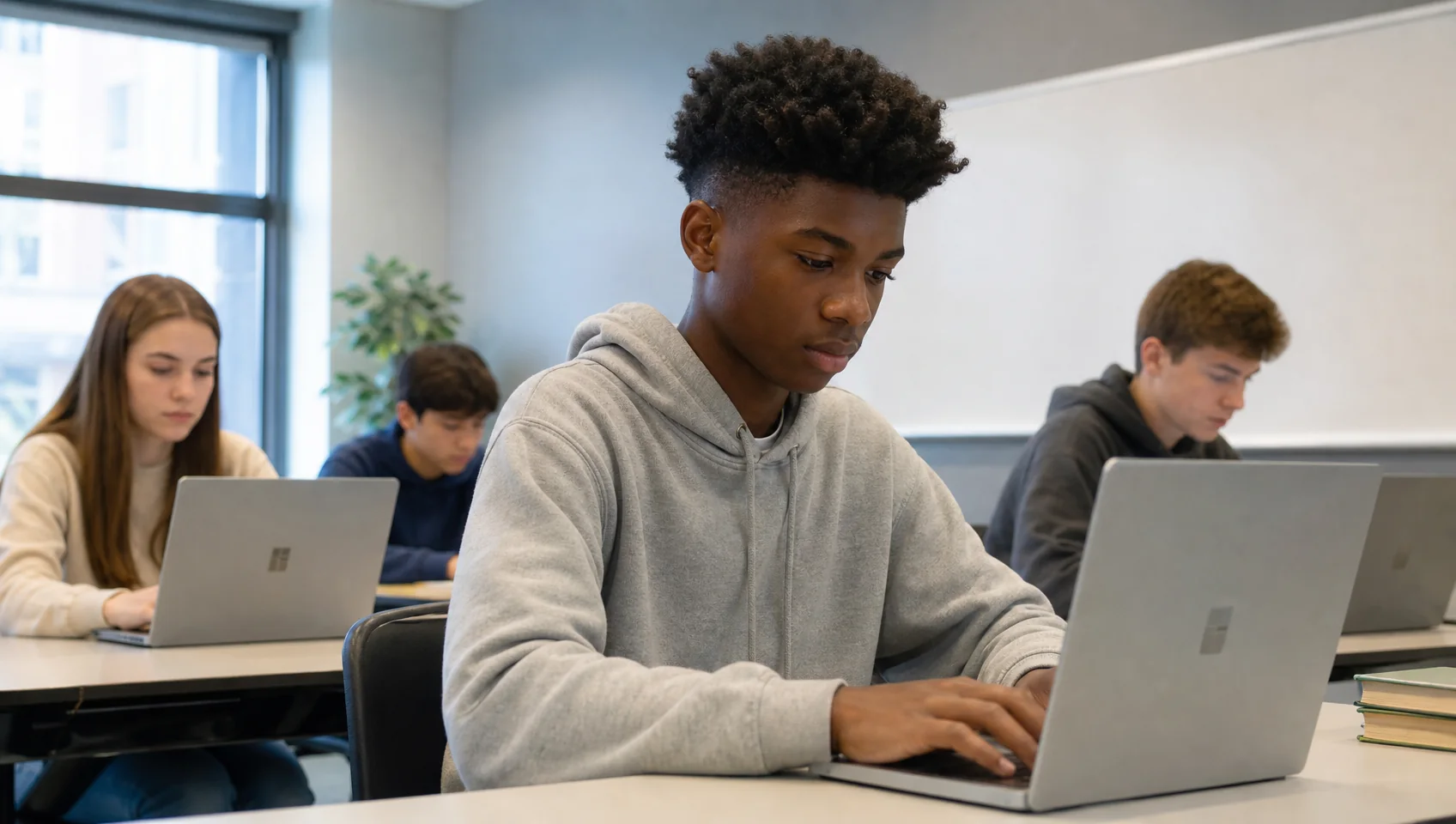
The commitments address how student conversations and personal information are handled when AI tools become part of required classroom software. Young users may not understand where their data goes or how long it remains available.
What Changed
New York City and Los Angeles schools have paused some student AI use while they study implementation. That caution reflects both privacy concerns and uncertainty over learning outcomes.
The immediate consequence is operational. Companies, policymakers and technical teams now have to translate the announcement into budgets, controls and measurable outcomes. That process usually exposes the distance between a product claim and a system that can be trusted under real workloads.
Trust depends on more than a disclosure buried in terms of service. People need meaningful notice, a way to challenge consequential outputs and a clear account of who is responsible when an automated system causes harm. UNESCO's AI ethics recommendation and the OECD AI Principles frame those obligations around human agency and accountability.
A company pledge can set a useful floor, but schools still need procurement terms, deletion controls and independent verification. Students should not have to trade sensitive data for access to ordinary education.
The Next Test
The next evidence will come from implementation rather than promises. Useful reporting should track who receives access, what safeguards are mandatory, how failures are disclosed and whether customers or the public can independently verify the claimed result.
That distinction matters because AI markets move quickly from announcement to assumption. Once a capability is treated as inevitable, procurement and policy can race ahead of the evidence. A disciplined response keeps the opportunity visible without treating uncertainty as an inconvenience.
Microsoft's student AI privacy commitment will ultimately be judged by what changes outside the launch cycle: the work completed, the risks reduced, the costs absorbed and the people who retain authority when the system is wrong. Those are slower measurements, but they are the ones that determine whether this development lasts.
Topics: Microsoft, education, student privacy, AI safety