Ethics
Congress Moves to Criminalize Deepfake Distribution — Rep. Lieu's Bipartisan AI Bill Explained
A new House bill introduced May 27 would make distributing non-consensual deepfakes a federal crime, protect AI whistleblowers, and require the US to participate in international AI standards bodies. Here is what it actually does.
By Leo W ·
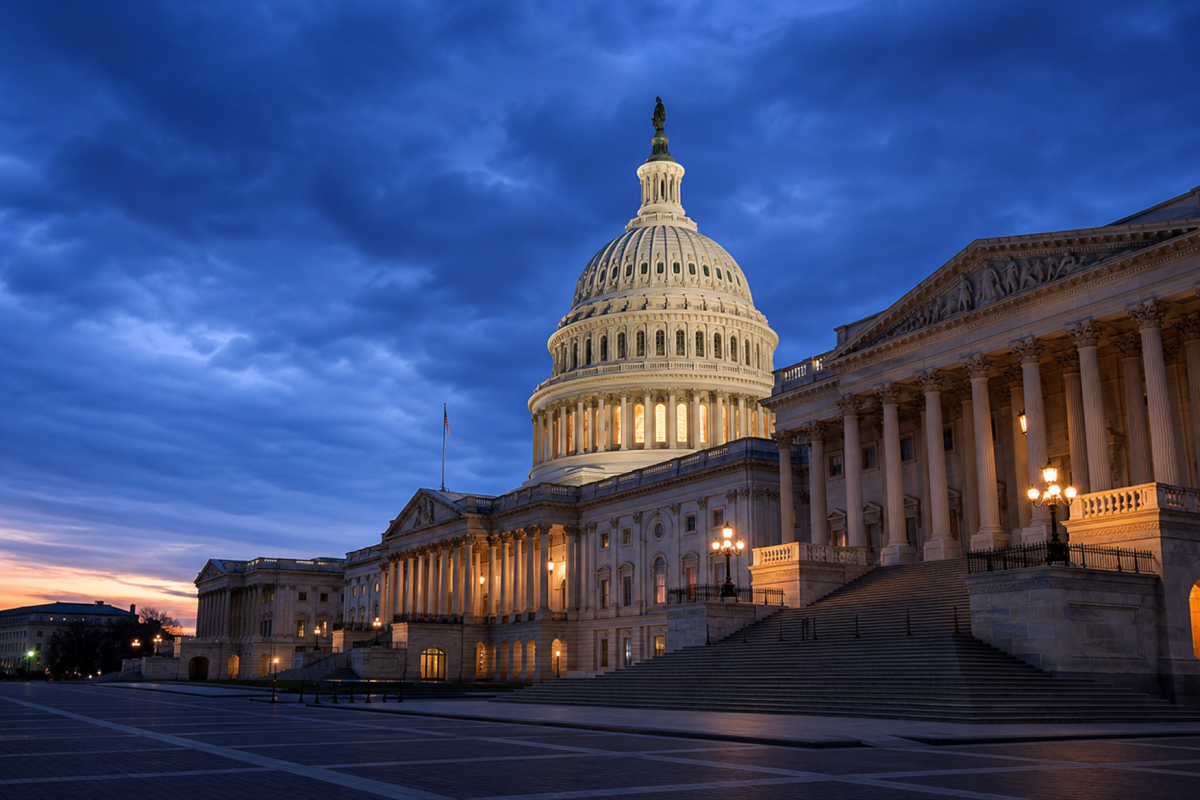
On May 27, 2026, Representative Ted Lieu (D-Calif.) introduced a wide-ranging artificial intelligence bill that would, for the first time, establish federal criminal liability for the distribution of non-consensual deepfake images and videos. The legislation, reported first by CNBC, also creates new protections for whistleblowers who report AI safety violations and mandates that the United States participate in international bodies developing technical standards for AI systems.
The bill is the most significant AI legislation to emerge from the House this session, and it arrives at a moment when Congress has struggled to move any major AI framework forward. Lieu, who co-led the bipartisan House AI Task Force with Rep. Jay Obernolte (R-Calif.), designed the bill explicitly to avoid the most divisive fault lines in the AI policy debate — including the question of whether federal standards should preempt state laws, and whether AI systems used in critical infrastructure should face mandatory pre-deployment testing requirements.
What the Bill Actually Does
The legislation has three principal pillars. The first and most immediately consequential is the deepfake provision, which would make it a federal offense to knowingly distribute intimate images or videos of a real person that were generated or manipulated by AI without that person's consent. The provision is modeled on existing state laws in California, Texas, and New York, but would create a uniform national standard that closes jurisdictional gaps exploited by bad actors who operate across state lines.
The second pillar establishes whistleblower protections for employees at AI companies, government contractors, and research institutions who report AI safety risks or legal violations to federal authorities. Under current law, AI workers who raise concerns about dangerous or deceptive systems have limited legal recourse if they face retaliation. Lieu's bill would extend the same protections that exist for financial and environmental whistleblowers to the AI sector — including reinstatement rights, back pay, and attorney fee coverage.
The International Standards Mandate
The third pillar is perhaps the least discussed but arguably the most consequential in the long term. The bill would require the United States to formally participate in international organizations developing technical standards for AI systems — including the International Organization for Standardization (ISO) and the International Electrotechnical Commission (IEC). This provision addresses a growing concern among US policymakers that American companies are losing influence over global AI standards to European and Chinese delegations, which have been more consistently represented at international standards bodies.
The bill also establishes a prize competition for groundbreaking AI research and development, modeled on the DARPA Grand Challenge model that accelerated autonomous vehicle development in the early 2000s. The prize mechanism is designed to incentivize research in areas the private sector has underinvested in — particularly AI safety, interpretability, and robustness testing.
It is not designed to be controversial. It is based on bipartisan legislation that other members have introduced, as well as the recommendations of the bipartisan House AI Task Force.
Rep. Ted Lieu (D-Calif.), in an interview with CNBC
What It Deliberately Avoids
Lieu has been explicit that the bill sidesteps the two most contentious issues in AI legislation: federal preemption of state laws, and mandatory pre-deployment testing for high-risk AI systems. Both issues have derailed previous AI bills. The preemption question has pitted tech companies, which want a single national standard, against state attorneys general, who want to preserve the ability to regulate AI independently. The testing question has divided the AI safety community, with some researchers arguing that mandatory testing requirements would give a false sense of security while others contend they are the minimum necessary safeguard.
Rep. Obernolte, who is working on a separate AI package expected later this year, has backed Lieu's bill. The fact that both the Democratic and Republican leads of the House AI Task Force are moving forward with complementary rather than competing legislation is seen as a positive signal by AI policy advocates who have watched years of legislative efforts stall.
The Broader Context: State Laws Are Moving Faster
The bill arrives as state legislatures have moved aggressively on AI regulation in the absence of federal action. California has enacted five bills in a single legislative session addressing digital replicas and deepfakes. Colorado passed what advocates called the nation's most comprehensive AI accountability law. New York has advanced deepfake legislation targeting both political and intimate imagery. The patchwork of state laws has created compliance complexity for technology companies and has generated pressure on Congress to establish a baseline federal framework.
The deepfake provision in Lieu's bill is particularly timely. A lawsuit filed in 2026 alleged that xAI's Grok model generated sexualized deepfake images of real individuals, bringing renewed attention to the liability gap that exists when AI systems produce non-consensual intimate imagery. The bill would not impose liability on AI model developers for outputs generated by users, but it would create clear criminal liability for the humans who distribute such content.
What Happens Next
The bill will be referred to the House Judiciary Committee and the House Energy and Commerce Committee, both of which have jurisdiction over elements of the legislation. The timeline for committee markup is unclear, but Lieu's decision to build the bill around the bipartisan task force's recommendations — rather than introducing new or contested policy positions — is designed to maximize the chances of moving through committee without becoming a partisan flashpoint.
For the AI industry, the whistleblower provision is likely to generate the most internal debate. Several major AI companies have faced public criticism over the treatment of employees who raised safety concerns internally. A federal whistleblower framework would change the calculus for employees considering whether to escalate concerns externally — and for companies considering how to respond when they do.
Topics: deepfakes, legislation, congress, whistleblowers, AI regulation