Ethics
California's AI Worker Protection Order: Newsom Signs Executive Order N-6-26 — But Is It Enough?
Governor Gavin Newsom signed Executive Order N-6-26 on May 21, requiring state agencies to prepare severance support for AI-displaced workers. Labor unions say it is a start — but a dangerously inadequate one.
By Michael C ·
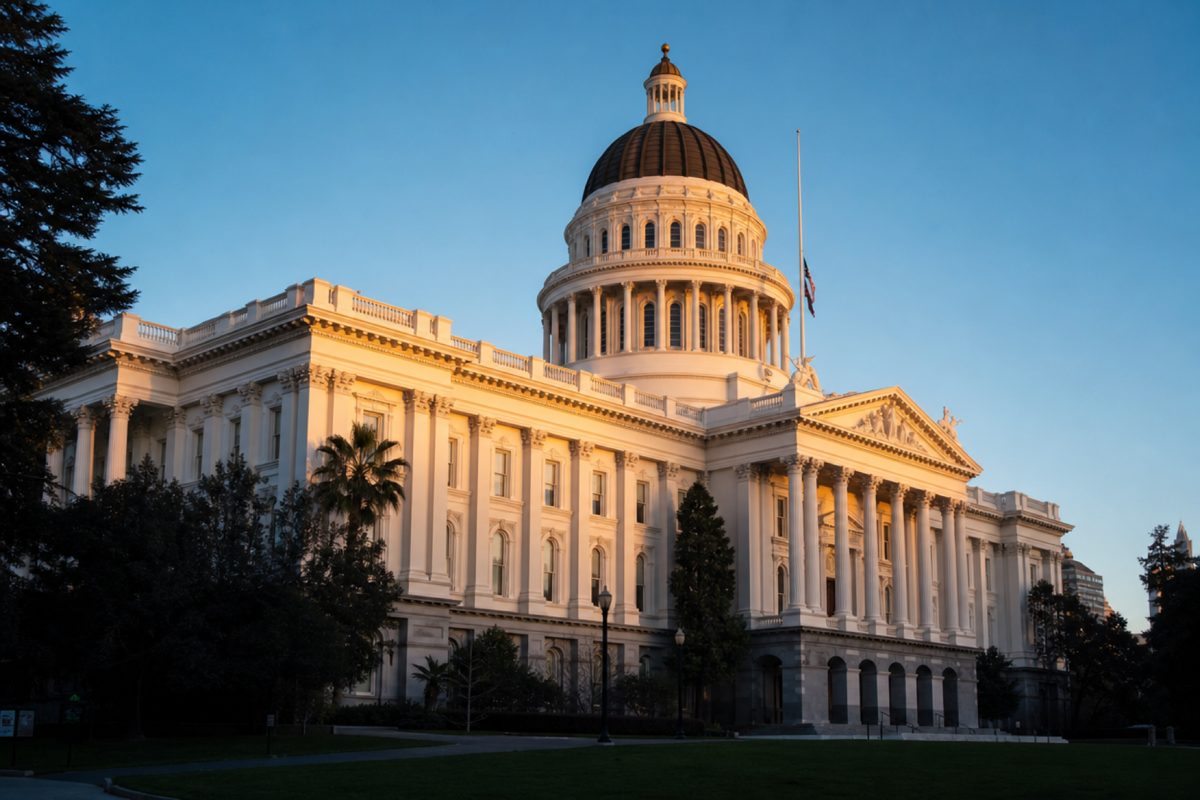
On May 21, 2026, California Governor Gavin Newsom signed Executive Order N-6-26, directing state agencies to develop support mechanisms — including improved severance packages — for government workers who are laid off as a direct result of AI implementation. The order is the first of its kind from a major US state executive, and it arrives as the debate over AI's impact on employment has moved from academic speculation to immediate policy urgency.
The response from organized labor was measured but pointed. SEIU Local 1000, which represents approximately 96,000 California state workers, welcomed the acknowledgment that AI displacement is a real and present concern — but argued that the executive order treats workers as an afterthought in a process that should center them from the beginning.
What the Order Requires
Executive Order N-6-26 directs California state agencies to conduct impact assessments before deploying AI systems that could reduce headcount, and to prepare transition support for affected workers. The transition support includes enhanced severance packages, retraining program access, and priority placement in other state roles. The order also requires agencies to notify the Department of Human Resources at least 90 days before any AI-driven workforce reduction, creating a mandatory review window.
The order applies specifically to state government agencies and does not extend to private sector employers in California. It also does not establish a moratorium on AI-driven layoffs — agencies can proceed with workforce reductions as long as they comply with the notification and support requirements. Critics argue this means the order creates a process for managing displacement rather than preventing it.
The Labor Union Response
SEIU Local 1000 President Anica Walls offered a carefully calibrated response that acknowledged the order's significance while making clear it falls short of what workers need. "We're glad to see Governor Newsom is finally acknowledging the serious impact AI could have on workers and public services," Walls said in a statement. "But workers cannot simply be treated as an afterthought while employers and corporations race toward automation."
Walls pointed to a concern that goes beyond job displacement: state workers are already experiencing AI tools that create more work rather than less, produce inaccuracies that require human correction, and still demand significant oversight. The union's position is that the framing of AI as a productivity tool that will eventually reduce headcount misses the current reality, in which AI is often adding to worker burden rather than replacing it.
State workers are already raising concerns about AI tools that create more work, produce inaccuracies and still require significant human oversight. California's public services depend on the experience, judgment and accountability that skilled public employees provide every day.
Anica Walls, SEIU Local 1000 President
The Broader Employment Picture
The executive order comes against a backdrop of sharply divergent data on AI's actual employment impact. New data from Indeed's Hiring Lab released this week suggests that AI is not yet the primary driver of job displacement in the US labor market — that distinction still belongs to macroeconomic factors like interest rates and consumer demand. However, the same data shows that AI-exposed occupations are experiencing slower hiring growth than non-exposed occupations, a leading indicator that displacement effects may accelerate as AI capabilities improve.
A separate OpenAI internal study, published in April 2026, found that AI raises worker productivity by approximately 40 percent on average — but that the gains are not evenly distributed. Junior employees benefit most, while senior staff show smaller productivity improvements. The study also found that AI widens the skill gap between high-performing and average workers, raising concerns about long-term income inequality even in scenarios where aggregate employment remains stable.

AI Shareholder Proposals: A Parallel Pressure Track
Newsom's executive order is not the only pressure being applied to AI deployment decisions this week. A new analysis from Quiversphere found that AI-related shareholder proposals at major US corporations have shifted significantly in 2026 — away from abstract ethics concerns and toward concrete questions about job cuts and workers' rights. Shareholders at Amazon, Microsoft, and Alphabet have filed proposals this proxy season demanding disclosure of AI-driven workforce reduction plans and the establishment of worker transition funds.
The shift in shareholder activism reflects a broader recognition that the reputational and regulatory risks of AI-driven layoffs are becoming material. Companies that move quickly to replace workers with AI without adequate transition support are increasingly facing not just union opposition but investor scrutiny — a dynamic that may prove more effective than executive orders in shaping corporate behavior.
What Would 'Enough' Actually Look Like?
For labor advocates, the gap between what Newsom signed and what they consider adequate is substantial. SEIU Local 1000 and allied unions have called for mandatory worker consultation rights before any AI deployment decision, binding agreements that limit the use of AI to augment rather than replace workers in specific roles, and a dedicated state fund — financed by a levy on AI-generated productivity gains — to support retraining and transition for displaced workers.
None of those provisions are in Executive Order N-6-26. What the order does establish, however, is a precedent: the state of California has formally acknowledged that AI displacement is a foreseeable harm that requires proactive policy response. For advocates who have spent years arguing that AI labor impacts deserve the same policy attention as AI safety and AI bias, that acknowledgment — however incomplete — represents a meaningful shift in the political landscape.
Whether the order becomes a floor that future legislation builds on, or a ceiling that allows policymakers to claim the issue has been addressed, will depend largely on what happens in the California legislature over the next twelve months. Several state assembly members have already signaled they intend to introduce bills that go further than the executive order — including mandatory worker consultation requirements and a proposed AI productivity levy. The political fight over those bills will be the real test of whether California's commitment to AI worker protection is substantive or symbolic.
Topics: AI labor, California, Newsom, workers rights, AI displacement, ethics