Analysis
OpenAI Files for IPO at Up to $1 Trillion — The Numbers That Should Worry Everyone
OpenAI's confidential S-1 reveals $25 billion in annualised revenue, a negative 122% operating margin, and $50 billion in planned compute spending for 2026 alone. The largest tech IPO in history is also one of the most financially precarious.
By Michael C ·
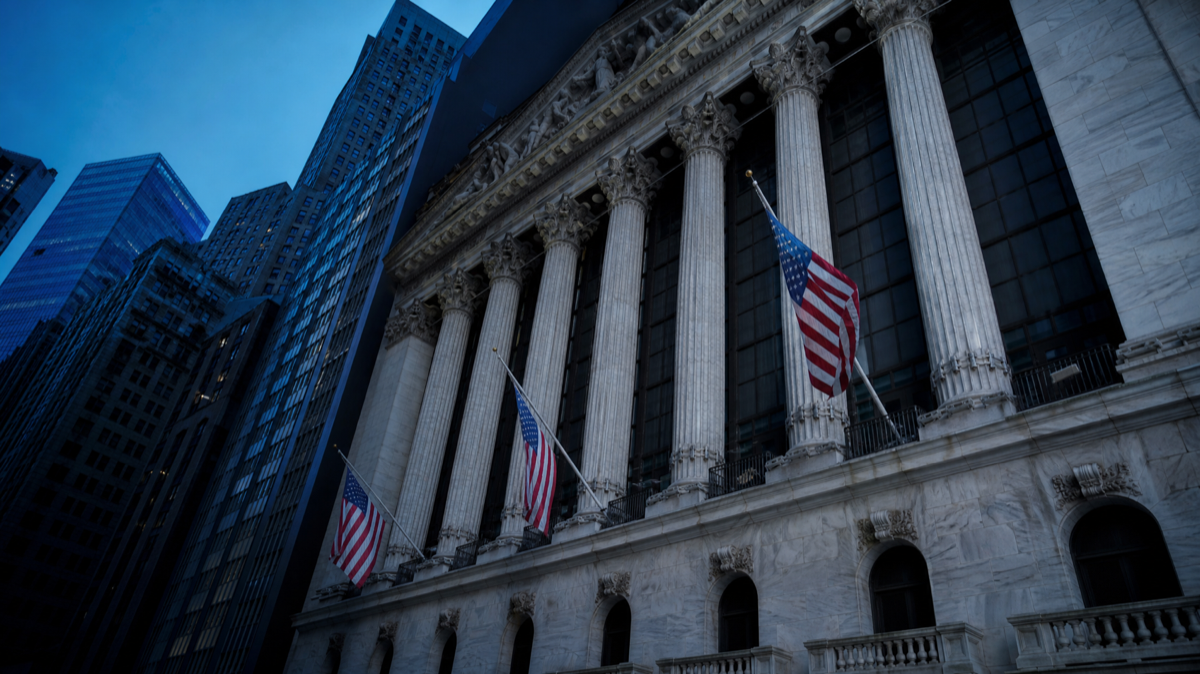
On May 22, 2026, OpenAI filed a confidential S-1 with the Securities and Exchange Commission, initiating what Goldman Sachs, Morgan Stanley, and JPMorgan are positioning as the largest technology initial public offering in history. The filing arrived two days after a federal jury dismissed Elon Musk's lawsuit against the company, clearing the most significant legal obstacle to going public. CEO Sam Altman has publicly stated his preference for a September listing.
The headline numbers are extraordinary in both directions. OpenAI generated approximately $25 billion in annualised revenue as of February 2026, representing 12.5x growth from $2 billion in 2023. Enterprise contracts now account for more than 40% of revenue and are on pace to reach parity with consumer subscriptions by year's end. The company's Q1 2026 revenue alone approached $6 billion, according to reporting by The Information.
A Business That Loses $1.22 for Every Dollar It Earns
The loss column is just as striking. OpenAI's Q1 2026 non-GAAP operating margin came in at negative 122%. For every dollar of revenue the company generates, it spends $2.22. The projected operating loss for the full year 2026 stands at $14 billion, and the company does not expect to reach profitability until 2030. These figures make OpenAI one of the most cash-intensive businesses ever to approach public markets.
For every dollar of revenue, OpenAI spends $2.22. The company does not expect profitability until 2030 — yet it is pursuing the largest technology IPO in history.
The loss story is fundamentally a compute story. OpenAI has committed to spending $50 billion on computing infrastructure in 2026 alone, according to co-founder Greg Brockman. To contextualise that figure: the entire U.S. semiconductor industry spent $56 billion on research and development in 2023. The company's infrastructure commitments extend far beyond the current year. OpenAI has signed a $38 billion deal with Amazon Web Services covering 2025 to 2031, and a $300 billion total arrangement with Oracle spanning 2027 to 2031 at $60 billion per year. An agreement with AMD covers six gigawatts of Instinct GPUs, worth an estimated $90 billion in cumulative hardware revenue.

The $122 Billion Round That Set the Valuation Floor
The IPO's pricing context is anchored by OpenAI's March 2026 funding round: $122 billion raised at an $852 billion post-money valuation, the largest private technology financing ever completed. The round was led by SoftBank, with significant participation from Microsoft, Amazon, and NVIDIA. Roughly $3 billion came from individual investors through bank channels, giving OpenAI a broader shareholder base ahead of the public offering. OpenAI shares already trade on secondary markets at approximately $733 per share on Forge Global, suggesting robust demand.
The implied price-to-sales ratio at the lower end of the valuation range is roughly 34 times annualised revenue. At the upper end, it exceeds 40 times. For comparison, Meta traded at 8 times revenue when it went public in 2012. Even Snowflake, the most richly valued enterprise software IPO of the past decade, priced at approximately 174 times trailing revenue — but Snowflake was generating $264 million at the time, not $25 billion. The sheer scale of OpenAI's revenue base makes direct historical comparisons difficult.
The Anthropic Complication
OpenAI's IPO ambitions have been complicated by a rival's move. On May 29, 2026, Anthropic announced it had raised $65 billion in a Series H round led by Altimeter Capital, Dragoneer, Greenoaks, and Sequoia Capital, at a valuation of $965 billion — surpassing OpenAI's last private valuation. Anthropic's annual revenue run rate, which stood at $9 billion a year ago, has surged to $47 billion as of earlier this month. The company is also racing toward its own IPO, and the two listings are expected to be among the most closely watched market events of 2026.

Governance Questions Linger
The S-1 filing will force OpenAI to disclose details it has long kept private, including the precise structure of its capped-profit model, the terms of its Microsoft partnership, and the governance arrangements that give Altman and the board unusual control over the company's direction. Analysts have raised questions about whether public market investors will accept the governance structure that OpenAI has maintained since its transition from nonprofit to capped-profit entity. The company's board retains the authority to override shareholder votes on matters it deems contrary to OpenAI's mission — a provision with no direct precedent in major technology IPOs.
Wall Street's reception will depend heavily on whether investors accept the premise that OpenAI's losses are temporary and that its compute investments will eventually yield returns that justify a valuation approaching or exceeding $1 trillion. The September timeline is ambitious. If the filing proceeds on schedule, OpenAI will have gone from a $29 billion valuation in 2021 to a potential $1 trillion public company in five years — a trajectory that has no precedent in the history of technology markets.
Topics: OpenAI, IPO, Finance, Valuation, Sam Altman