Analysis
Elon Musk And Mark Zuckerberg Return To The Front Of The AI Race On Price And Scale
New models from Musk's SpaceX and Zuckerberg's Meta have narrowed the performance gap with OpenAI and Anthropic, while lower prices show why infrastructure scale may matter as much as a temporary benchmark lead.
By Elvin C ·
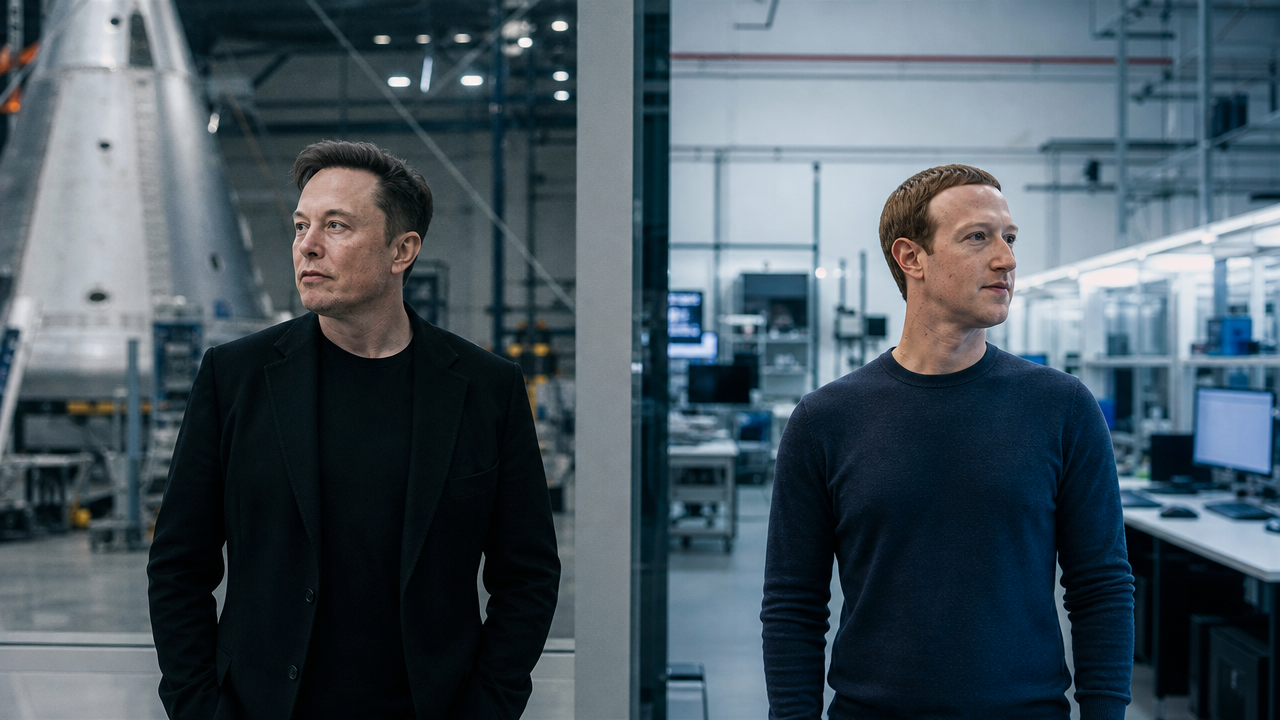
Elon Musk and Mark Zuckerberg have moved back toward the front of the AI model race after new systems from SpaceX and Meta combined stronger performance with prices that challenge the premium charged by OpenAI and Anthropic. The comeback does not erase the frontier labs' lead, but it changes the market question from who has the smartest model to who can supply enough intelligence at a cost customers will keep paying.
Musk's Grok 4.6 scored roughly even with OpenAI's GPT-5.6 Sol Max and behind Anthropic's Fable 5 Max on the Artificial Analysis Intelligence Index, according to Axios. Meta is approaching from a different direction, using its distribution and lower-cost model strategy to pressure the market below the most expensive frontier tier.
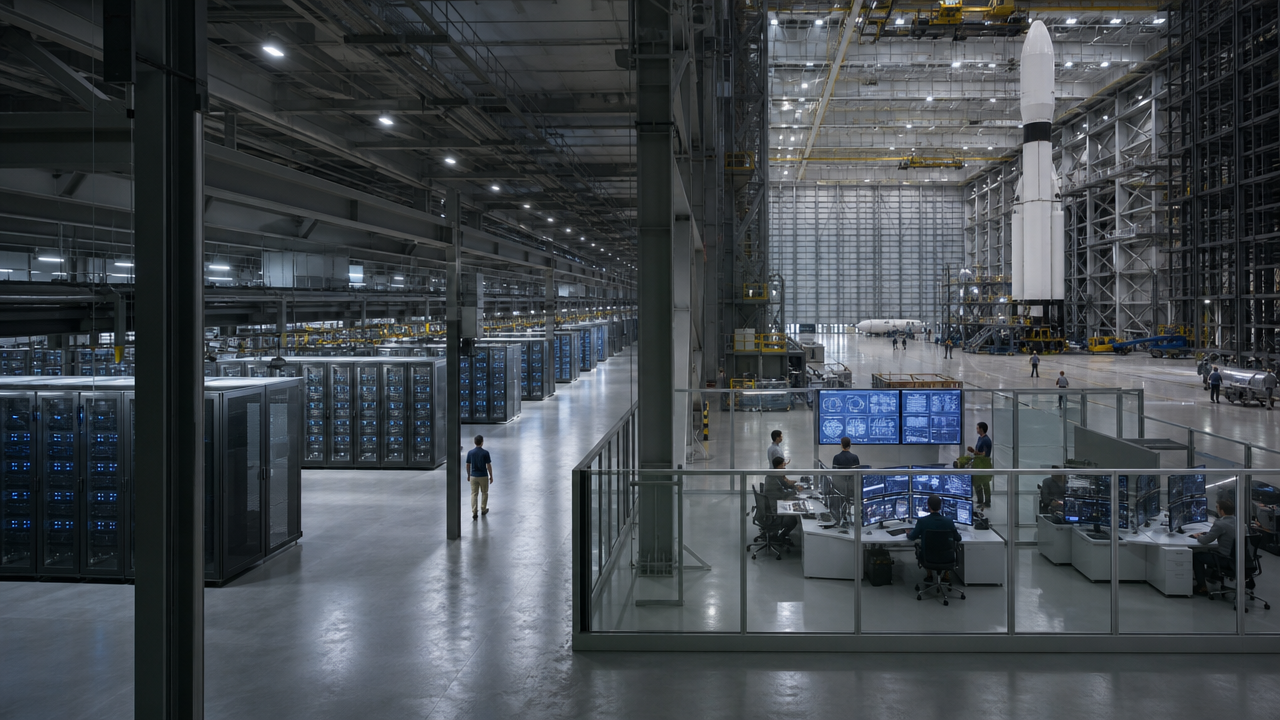
Leaderboards can change in a week. Infrastructure advantages endure longer. Musk can connect model development to SpaceX compute, energy procurement, communications and a large engineering organization. Zuckerberg can place Meta AI across products used by billions of people and absorb model costs across an advertising business with global reach.
Price Is Becoming A Capability
A model's usefulness depends partly on whether a customer can afford to call it repeatedly. Agents do not produce one answer and stop. They plan, search, write, test, correct and sometimes delegate to other agents. A small difference in token price can become a large difference in the cost of completing a workflow.
That favors companies with room to subsidize adoption or optimize across a broader stack. Meta has spent years arguing that open and accessible models can expand its ecosystem even when the model itself is not the main source of revenue. Musk can use aggressive pricing to pull developers toward Grok while capturing value elsewhere in a combined aerospace, communications and AI business.
OpenAI and Anthropic still have strong positions. Both have deep enterprise relationships, mature developer tools and systems that users trust with difficult work. Anthropic has been especially effective in coding and enterprise adoption. OpenAI remains the category's most recognizable consumer brand. A cheaper rival must prove reliability, not merely post an attractive launch rate.
The competitive response is likely to be segmentation. Premium models will handle tasks where an error is costly or where the highest reasoning performance matters. Smaller and faster systems will take routine work. Routing software will decide between them. In that market, no provider needs to win every benchmark to capture a meaningful share of total usage.
This weakens the winner-take-all story that has supported some frontier-lab valuations. If customers can switch among several models without rebuilding their applications, the supplier with the highest score has less pricing power. Value moves to the company that controls distribution, proprietary data, the customer relationship or the routing layer.

Two Empires, Two Different Advantages
Musk's advantage is concentration. He can direct capital, hardware and talent across a group of tightly influenced companies and make decisions that a conventional board might reject as too expensive or too fast. That can accelerate construction and training. It can also increase key-person risk and make product priorities vulnerable to sudden strategic changes.
Zuckerberg's advantage is distribution. Meta can put an assistant in messaging, social media, wearables and advertising tools without asking users to establish a new habit. The challenge is trust. A model attached to products built around personal data and recommendation systems must convince users that added capability will not simply deepen profiling or engagement pressure.
Both companies also have balance-sheet flexibility that independent labs lack. They can finance model development with cash flows or public-market capital rather than returning to private investors for every major expansion. That flexibility becomes more valuable as training runs and inference commitments grow larger.
Scale is not the same as discipline. Large companies can waste more money for longer. The real advantage appears when infrastructure, model design and product distribution reinforce one another. A cheap model that users do not want is not a moat. A widely distributed assistant that makes costly errors can damage the platform carrying it.
Musk has already promised a Grok 4.7 release within weeks and predicted that it will exceed current models. That schedule keeps attention on the next benchmark cycle, but customers should focus on the current system's stability, safety and total workflow cost. Forecasts are free. Production incidents and failed automations are not.
The Market Is Getting More Competitive, Not Simpler
A four-way contest among OpenAI, Anthropic, Meta and Musk's companies will not create a tidy ranking. Each provider will lead different workloads and use different economics. Google remains a major force with its own distribution and model stack. Chinese open-model developers continue to put downward pressure on price. The sensible enterprise strategy is evaluation and optionality, not fandom.
That means building a repeatable test set from real work, recording quality and latency, and pricing the complete task rather than a million-token headline. It also means planning for model changes. Providers retire endpoints, alter safety behavior and revise prices. A system that can move between models has bargaining power; one built around hidden assumptions does not.
Musk and Zuckerberg did not return to the race by proving that years of frontier research no longer matter. They returned by showing that immense existing businesses can convert capital, compute and distribution into credible model performance. The next phase will reveal whether those advantages produce durable products or simply a cheaper way to keep the benchmark cycle moving.
Topics: Elon Musk, Mark Zuckerberg, Grok, Meta AI