Technology
John Deere Introduces JD, an AI Assistant for Farmers
John Deere's JD assistant is designed to answer equipment and operating questions faster, bringing conversational AI into farm management and machine support.
By Patrick T ·
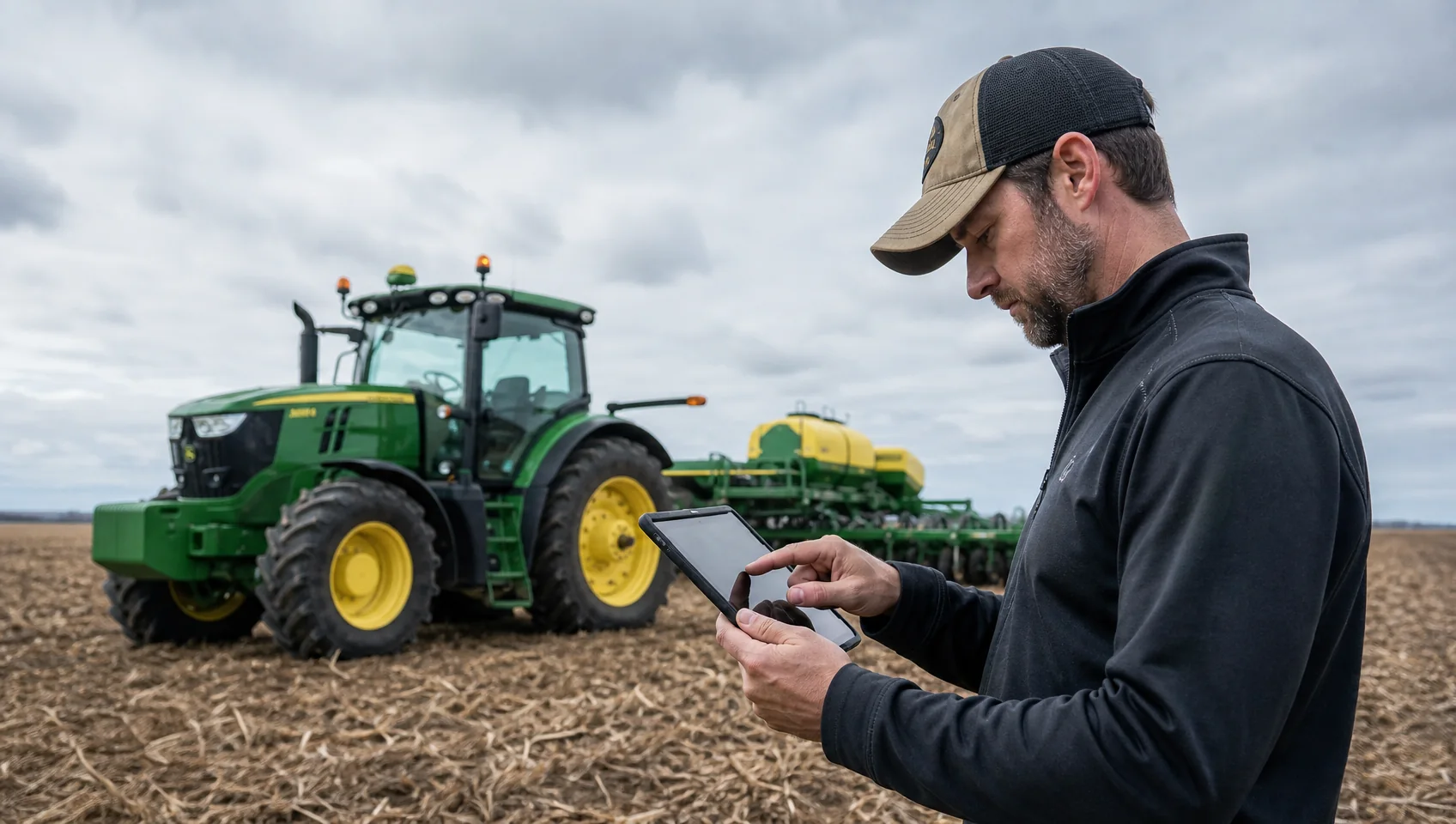
John Deere's JD assistant. John Deere's JD assistant is designed to answer equipment and operating questions faster, bringing conversational AI into farm management and machine support. The development emerged in Signal Diff's September 13 briefing, placing a concrete decision, release or disclosure behind a debate that had often been discussed in broader terms.
The value proposition is access to equipment knowledge when timing matters. A delayed repair or incorrect setup can affect a short planting or harvest window.
What Changed
Agricultural assistance requires context beyond a generic chatbot, including machine configuration, service history, field conditions and regional guidance. That makes permissioned data and accurate retrieval central to the product.
The immediate consequence is operational. Companies, policymakers and technical teams now have to translate the announcement into budgets, controls and measurable outcomes. That process usually exposes the distance between a product claim and a system that can be trusted under real workloads.
The implementation question begins after the product demo. Enterprises must connect identity, permissions, data quality, monitoring and human approval before a capable model becomes dependable infrastructure. NIST's AI Risk Management Framework offers a useful baseline, while OWASP's guidance covers the application-layer failures that appear when models receive tools and data.
Farmers will need clear boundaries between informational support and recommendations that affect safety, warranties or agronomy. The assistant should show its source and hand off to a qualified person when confidence is low.
The Next Test
The next evidence will come from implementation rather than promises. Useful reporting should track who receives access, what safeguards are mandatory, how failures are disclosed and whether customers or the public can independently verify the claimed result.
That distinction matters because AI markets move quickly from announcement to assumption. Once a capability is treated as inevitable, procurement and policy can race ahead of the evidence. A disciplined response keeps the opportunity visible without treating uncertainty as an inconvenience.
John Deere's JD assistant will ultimately be judged by what changes outside the launch cycle: the work completed, the risks reduced, the costs absorbed and the people who retain authority when the system is wrong. Those are slower measurements, but they are the ones that determine whether this development lasts.
Topics: John Deere, agriculture, AI assistant, equipment