Analysis
Singapore AI Week Maps The New Regional Power Structure For AI
The first day of Singapore AI Week showed how the region's AI power structure is being built before the main stage opens: through builders, startups, enterprise buyers, policy circles, and city-wide communities converging around SuperAI.
By Elvin C ·
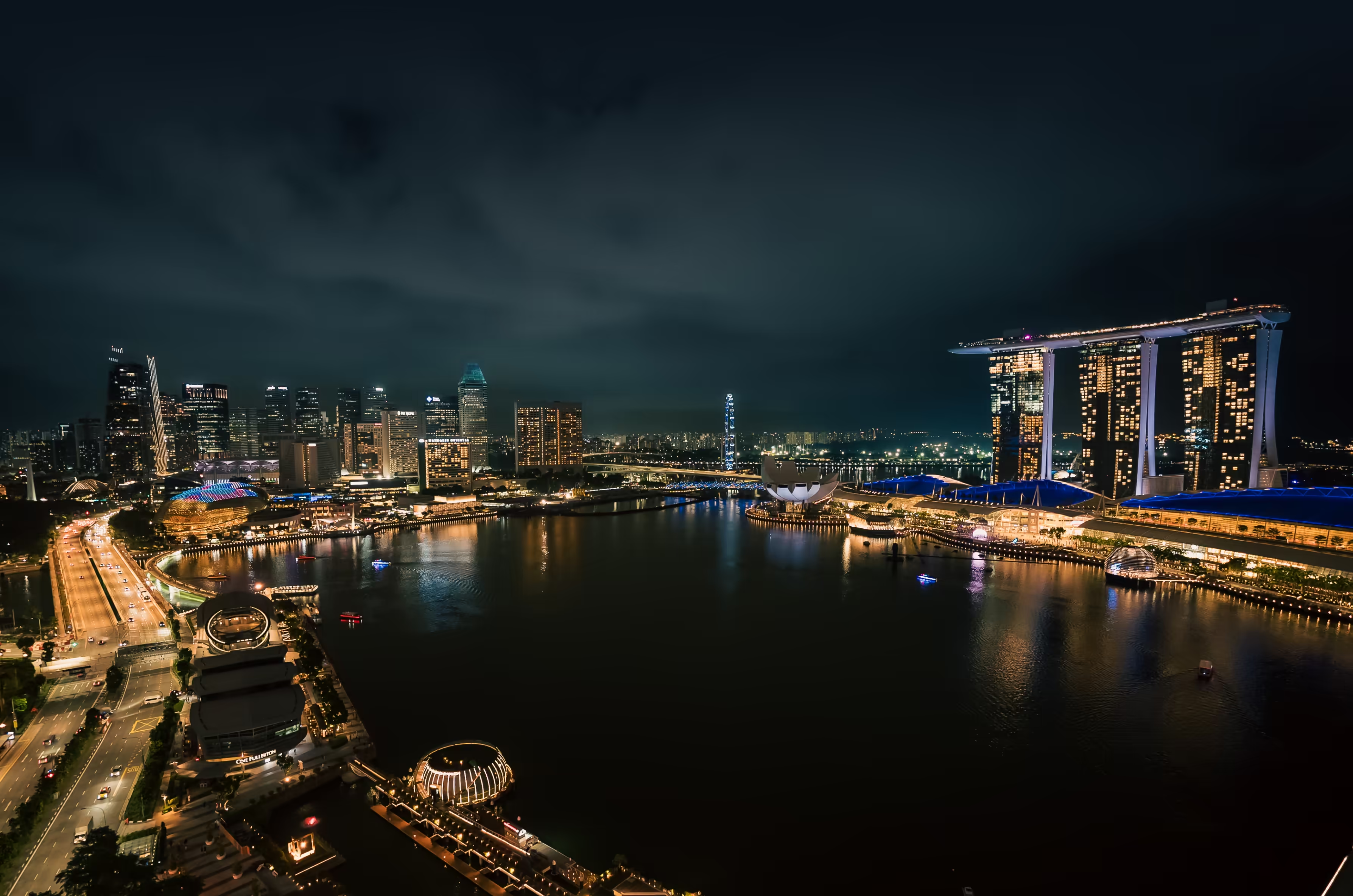
Singapore AI Week opened less like a single conference and more like a map of the new Asian AI operating system. The first day, June 8, was not built around one keynote or one model announcement. It was built around a distributed pattern: builders meeting before the main stage, online regional programs pulling in the ASEAN ecosystem, hackathon tracks running in parallel, and evening gatherings turning the city itself into part of the event infrastructure. The key institutions and terms in this story include SuperAI, Singapore AI Week, Genesis, NEXT Hackathon, Marina Bay Sands, and Singapore.
That shape matters. AI power is still often described through the language of frontier labs, foundation models, chips, and benchmark races. But the first day of Singapore AI Week showed a different layer of power forming underneath: the ability to convene founders, technical teams, investors, government-adjacent institutions, enterprise buyers, and regional communities in the same city at the same time. In that sense, Singapore was not just hosting AI. It was demonstrating why location, trust, capital, and policy fluency are becoming strategic assets in the AI economy.
The main SuperAI conference, staged at Marina Bay Sands later in the week, remains the anchor. It gives the week its gravitational center and international brand. But Day One showed that the real regional power map is wider than a ballroom. It stretches across run clubs, hackathons, startup summits, online learning programs, investor rooms, product meetups, and informal founder networks. This is where adoption actually begins: before procurement teams issue requests, before ministries publish strategies, and before model companies announce partnerships.
Day One Started With Community, Not Ceremony
The opening rhythm was unusually revealing. Singapore AI Week began with a morning community event at Marina Bay Sands, then moved into a day of builder and regional programming. That is a different tone from the old technology-conference model, where the first signal is usually a polished keynote. Here, the first signal was network density. People were not just being told what the AI future would look like. They were being sorted into the rooms, tracks, and informal circles where that future might be built.
The early schedule captured the breadth of the week. A virtual Agent Dev Kit bounty challenge gave developers a long-running technical lane. AIM ASEAN's online AI program positioned the week as a regional learning and coordination exercise, not only a Singapore showcase. Builders Summit: Singapore gave founders and operators a focused afternoon track. By the evening, Day Zero and other meetups turned the city into a social layer for AI deal flow, recruiting, and partnership discovery.
That mix is important because the most valuable AI ecosystems no longer grow from one type of institution. They grow from the collision between technical capability and deployment context. A developer experimenting with agents needs model access, cloud credits, data tooling, and distribution. A startup founder needs capital, enterprise credibility, and regional customers. An enterprise buyer needs safety, procurement confidence, and a credible path from demo to workflow. A government body needs economic upside without letting the governance problem drift. Day One put all of those needs into motion at once.
Singapore's Advantage Is Translation
The strongest read from the first day is that Singapore's AI advantage is not simply that it can attract an international event. The deeper advantage is translation. The city is fluent in the languages that now matter for AI adoption: finance, logistics, public sector modernization, cross-border regulation, enterprise software, education, and startup capital. That makes it a useful place for global AI narratives to be converted into regional operating plans.
For Southeast Asia, this is not a small point. The region is not one market. It is a patchwork of languages, income levels, regulatory regimes, cloud maturity, enterprise needs, and public-sector priorities. A model or agent platform that works cleanly in San Francisco, London, or Shenzhen does not automatically become useful in Jakarta, Bangkok, Manila, Ho Chi Minh City, or Kuala Lumpur. The translation layer is where value is created. Singapore AI Week, by design, sits on that layer.
That is also why the event's first day felt less like a victory lap for existing AI leaders and more like a positioning exercise for the next phase. The frontier model race remains concentrated in a handful of companies and countries. But the adoption race is more open. It will be won by the places that can help businesses identify real workflows, assemble trusted vendors, manage data boundaries, and move pilots into production. Singapore is making the case that it can be one of those places.
The Builder Layer Is Becoming Strategic
Day One's builder emphasis also pointed to a shift in the center of gravity. In 2023 and 2024, much of the AI conversation revolved around access to frontier models. In 2025 and 2026, the question has become what people can actually build on top of them. Agents, copilots, workflow automation, retrieval systems, multimodal interfaces, and domain-specific tools are where the practical competition is moving. That makes builders strategically important, not just culturally interesting.
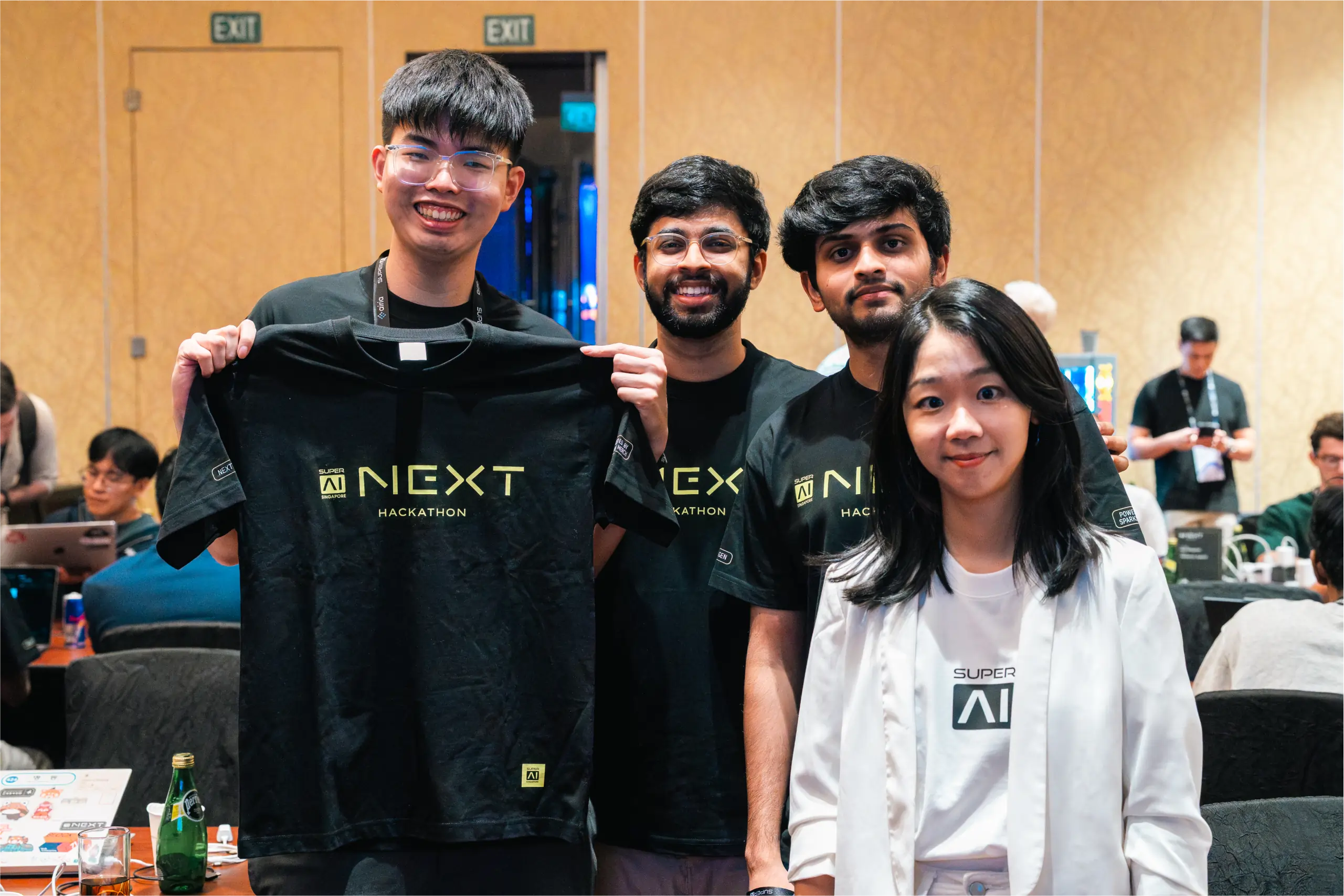
The hackathon and bounty structure is one clue. A prize pool or challenge track is not only a marketing asset. It is a way to surface talent, test developer tools, create reference applications, and discover which ideas survive contact with actual implementation. In the AI market, where demos are easy and durable products are hard, builder competitions function as a stress test. They reveal which stacks are usable, which teams can ship, and which use cases have enough pull to justify more capital.
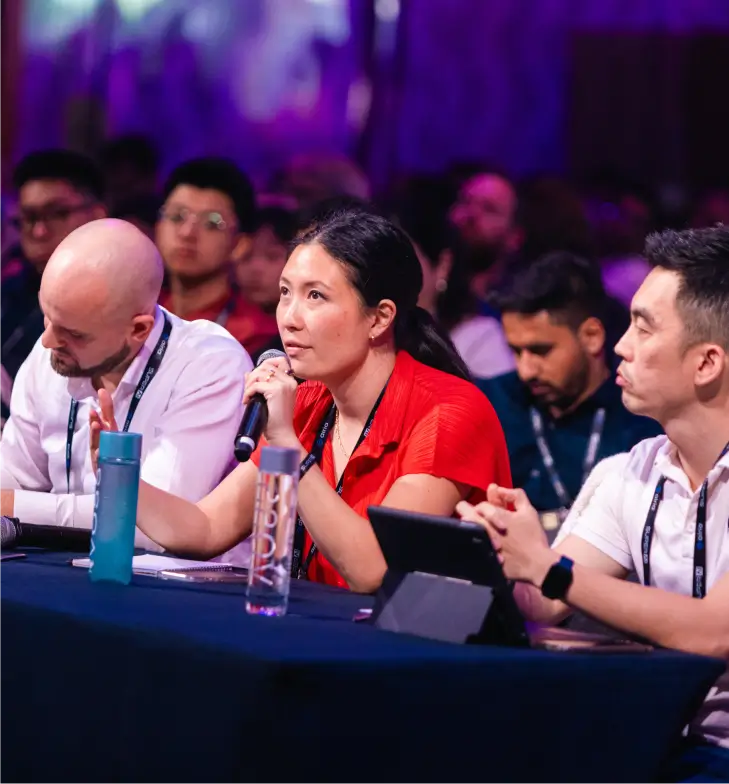
Genesis, SuperAI's startup competition powered by OpenAI and Microsoft for Startups, adds another layer to that story. Its 2026 structure brought a large startup funnel into a highly visible regional stage, with finalists competing for a prize pool made up of credits and support. That matters because credits are becoming a form of industrial policy for startups. Compute, model access, cloud support, and distribution partnerships can shape which young companies get to move fast enough to matter.
The result is a new kind of AI conference economy. The show floor is still important, but the more interesting activity happens around the edges: founders meeting infrastructure providers, developers finding teams, investors watching live product instincts, and enterprises using the week to scan the market without committing to a long procurement cycle. Day One was the first proof that Singapore AI Week is trying to serve that whole loop.
Enterprise Buyers Are The Hidden Audience
The public face of AI events is usually founders and speakers. The hidden audience is enterprise buyers. They are the people who decide whether AI moves from narrative to budget. In Asia, that audience is especially important because many companies are still deciding how aggressive they should be. They have watched the model race accelerate, but they also have to deal with legacy systems, compliance, data residency, multilingual operations, and risk committees that do not sign off on magic.
Singapore AI Week gives those buyers a compressed way to compare the market. They can see agent platforms, cloud tooling, industry applications, AI governance vendors, cybersecurity products, productivity tools, and infrastructure providers in one week. Just as importantly, they can test the social proof around those companies. Who is being funded? Who is being used by credible customers? Who has serious technical talent? Who understands the region rather than treating it as a generic expansion market?
That is where the regional power structure begins to show itself. The companies that matter in Southeast Asian AI may not be the ones with the biggest global press cycles. They may be the ones that can localize deployment, integrate with messy enterprise systems, meet regulatory expectations, and prove return on investment. Day One made that practical adoption layer visible.
Policy Was Present Even When It Was Not Center Stage
The first day was not primarily a policy summit, but policy was everywhere in the background. That is unavoidable in Singapore. AI adoption in the region touches data governance, workforce planning, education, financial regulation, public-sector procurement, cybersecurity, and cross-border trust. The city-state has spent years positioning itself as a place where innovation and governance can be discussed in the same room without turning the conversation into theatre.
That matters because the AI governance debate is entering a more practical phase. Companies no longer need another abstract argument about whether AI should be regulated. They need to know what controls are expected, what evidence is required, how models should be evaluated, and who is accountable when automated systems affect customers, workers, or citizens. Singapore AI Week's value is partly that it gives those questions a commercial context. Governance is not treated as a separate moral panel. It becomes part of whether AI products can be bought, trusted, and deployed.
The Regional Power Map Is Becoming Multipolar
One of the mistakes in global AI analysis is to treat Asia as a single counterweight to the United States. The more accurate map is multipolar. China has scale, state coordination, manufacturing depth, and a powerful domestic model ecosystem. Japan and Korea have hardware, robotics, industrial automation, and deep enterprise incumbents. India has developer density, services exports, and a massive domestic digital market. Southeast Asia has fast-growing users, mobile-first behavior, and complex enterprise modernization needs. Singapore sits at the intersection, not as the largest market but as a coordination point.
The first day of Singapore AI Week reflected that multipolar reality. Its programming did not need to claim that Singapore would become the region's only AI capital. The more credible claim is that Singapore can become one of the region's most useful AI switchboards. A switchboard is not the biggest generator of signal. It is the place where signals are routed, translated, tested, and connected to the next node.
That framing is more realistic and more powerful. The region does not need a single AI capital. It needs connective tissue between talent, infrastructure, policy, capital, and customers. Singapore AI Week is attempting to provide that connective tissue in a visible, repeatable format.
What The First Day Revealed
The most important signal from Day One was that the week began before the spotlight. That is where serious ecosystems usually reveal themselves. The polished main-stage moments will generate the clips, but the early builder sessions and city-wide events show whether there is enough local and regional energy to sustain the narrative. On that test, Singapore AI Week looked less like an imported conference brand and more like an ecosystem trying to organize itself.
There is still a gap between convening power and deployment power. Singapore can bring the right people into the same week, but the harder test is what happens after the badges come off. Do enterprise pilots turn into production systems? Do founders leave with customers, not only contacts? Do regional developers get access to tools and capital they can actually use? Do governance conversations produce repeatable deployment patterns? Those are the metrics that matter.
Topics: Singapore AI Week, SuperAI, Asia AI, AI adoption